

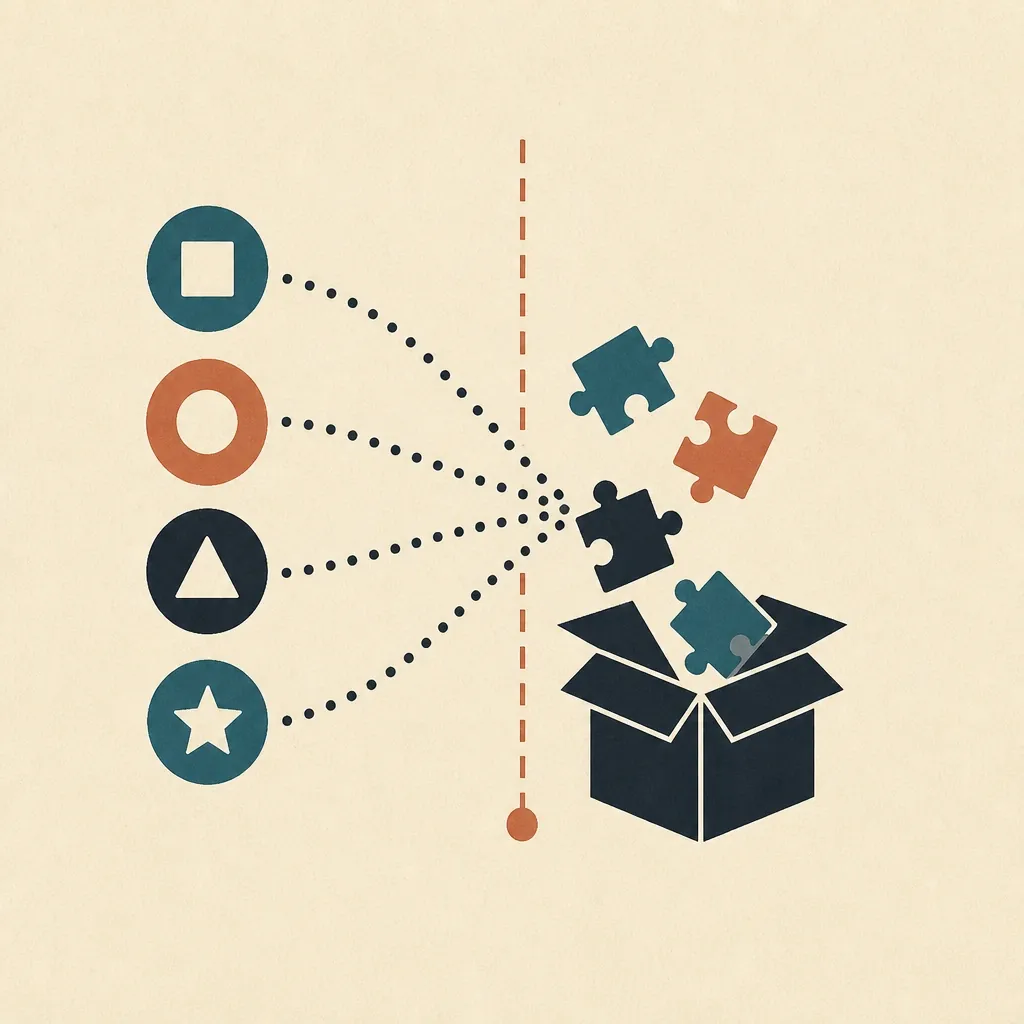
Enrolment data arrives too late to act on
Applications, deposits, aid and registration live in separate systems. The full picture assembles after the point where intervention was possible.

Public sector · India & South Asia
Enrolment is holding up today. The intake pool is not. Institutions that cannot see enrolment, retention and cost in one place will decide blind.
projected US high school graduates in 2041, down from a record 3.9 million in 2025.
In India
Platforms in this market
Rules that apply here
We read the rule before the call. It is the cheapest way to prove we did the work.
What is happening
Applications, deposits, aid and registration live in separate systems. The full picture assembles after the point where intervention was possible.

Attendance, LMS activity, financial holds and advising notes each predict risk. Separately, none of them trigger anything.

Districts and institutions face inflation, a shrinking intake pool and unpredictable funding, while obligations in special education and support services grow.

Which is how tighter budgets become teacher burnout, and burnout becomes another cost.
However hard, whatever it is
We wrote this about seeing the intake pool. If yours is timetabling, estates or a returns deadline nobody owns, the approach is identical.
 01
01 Days where the work happens, not a workshop in a meeting room. We watch the job get done and write down the shortcuts nobody wrote down.
 02
02 Your data, your rules, your vendors and their documentation, and the published research on your sector. We report what is actually in there.
 03
03 Not which tool fixes this. What is actually causing it, taken apart until we reach the piece that cannot be divided further.
 04
04 Weeks, not quarters. By this point we are not guessing what to build, and guessing is the thing that makes projects long.
Where we sit
What you get
Built new for you — none of this exists in your stack today
What you already run — unchanged, and still yours
If the student system holds it, we can reach it. A nightly extract, a form the registry emails, a student-system screen nobody is allowed to change. All of it can be used.
 No API
  No documentation
  A terminal from 1994
  It arrives as paper
  The vendor said no
  It reports nothing
 Not a list of limits. Name yours on the call.
And once we can reach it, a model can read it. Most of the value here is in the sources nobody ever structured — the note, the letter, the screen.
Intelligence, plumbed in
We build the retrieval and the semantic layer over four student systems, and we score it against last year's real outcomes.
How we make AI survive real data Connectors
  A semantic layer
  Evals you can check
 What changes
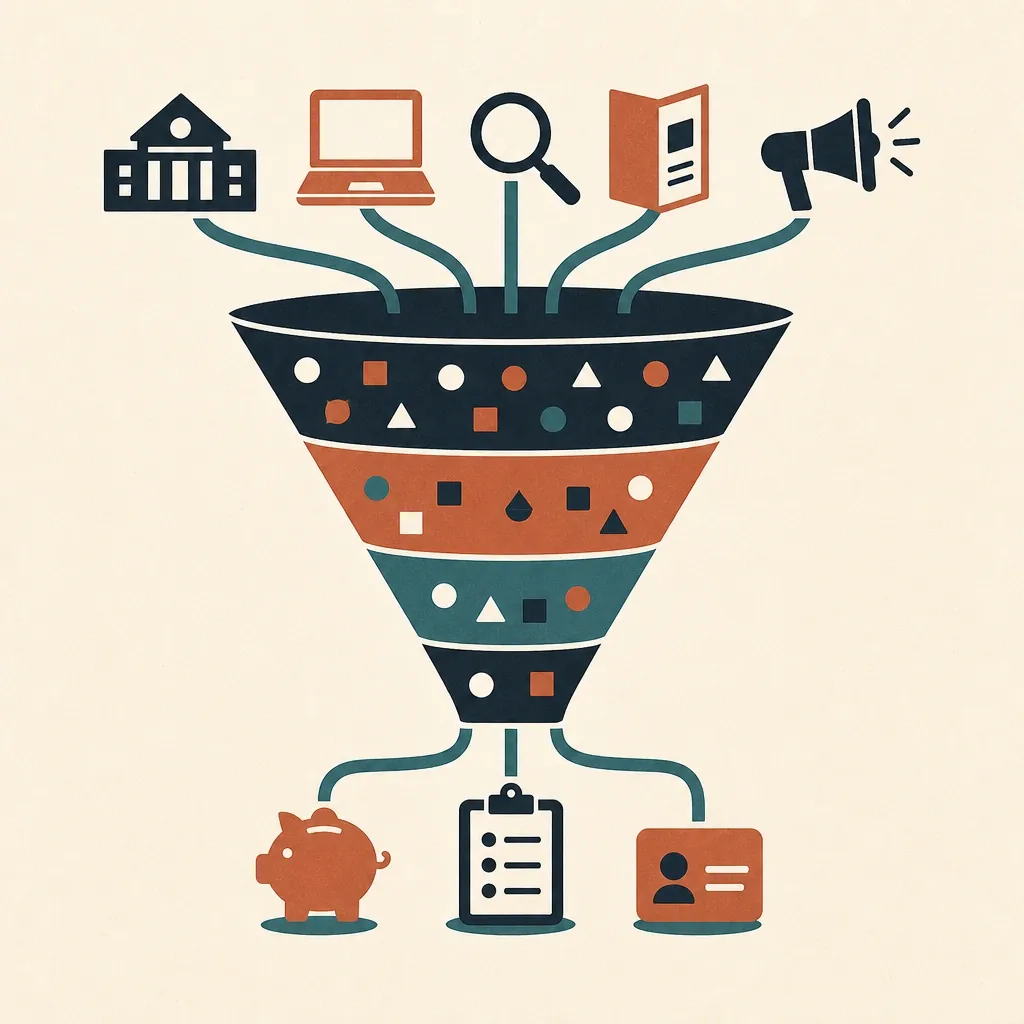 Earlier
 Applications through deposit, aid and registration in one view, by segment and by source.
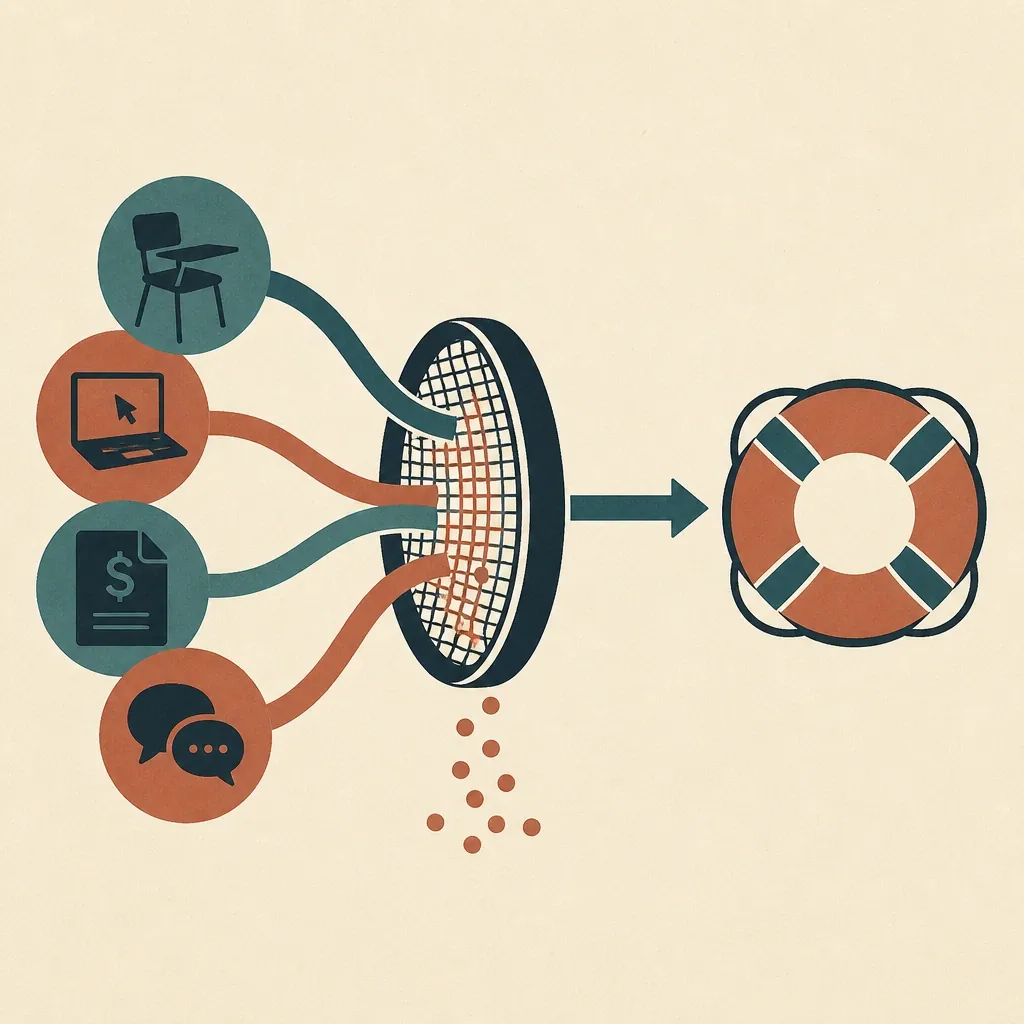 Retention
 Attendance, engagement, financial holds and advising history combined, with a route to action rather than a report.
 Hours back
 Reporting, compliance returns and data entry automated where the data already exists elsewhere.
Who this is for
 VP of Enrolment Management
  Chief Information Officer
  Registrar
  Director of Institutional Research
  District Superintendent
 Straight answers

An SIS records status. To act on enrolment and retention you need admissions, financial aid, the LMS and advising in one view. Today they sit in four systems, with different IDs and different update times.

Handled under FERPA constraints with role-scoped access and per-record logging. Predictive signals are designed to route to a human who can act, never to make a decision about a student automatically.

Yes. That is why we start small. A short paid look at your data lets a smaller district find out if this is worth doing before committing to anything bigger.

It reads, it never writes. The early-warning list comes from notes and activity you already hold, scored against last year's real outcomes.
For education that means the UGC and AICTE, NAAC accreditation, NEP 2020 credit rules and the DPDP Act 2023. We read the rule before the call, so the first meeting is about your operation rather than about us catching up.
What you already run stays where it is. Around it we build software, hardware and the process itself. Here that means an early-warning list a tutor gets on monday morning.
See everything we build Software
  Hardware
  Ways of working
  Whole ventures
 Honest about the numbers
We have not localised it, because a number nobody can check is worth less than a real one plus this sentence. The pattern travels. The size of it in your market is a question for the call.
Same industry, other markets