


India, Sri Lanka and Bangladesh
Built for how the work runs here.
Public digital infrastructure at a scale nowhere else has, sitting next to operations still run on paper. The gap between the two is the work.
industries with a verified local stack
of 23 we work in
What we have already read
The rules and regulators behind these pages.
Not a list of things we could look up. These are named on the industry pages below, with what they change about the work.
- RERA
- stamp duty by state
- GST on under-construction sales
- the DPDP Act 2023
- GST and the e-way bill
- ONDC standards
- the Legal Metrology Act
- FSSAI licensing
- GST
- state excise rules
- the Shops and Establishments Act
- the RBI
- CKYC
- the Account Aggregator framework
- the IRDAI
- Bima Sugam standards
- GST on premiums
- the Clinical Establishments Act
- state nursing home rules
- NABH
- ABDM health data standards
- NHA claim rules
- ABDM standards
- IRDAI claim rules
- Clinical Establishments Act
- state home care rules
- the Mental Healthcare Act 2017
- state licensing
- the Maintenance and Welfare of Parents Act
- state senior care rules
- the Bar Council of India
- the Commercial Courts Act
- GST returns
- TDS deduction
- MCA21 filing
- EPFO and ESIC filing
- the Shram Suvidha returns
- state labour codes
- MeitY guidelines
- the RTI Act
- GIGW accessibility
- DAP 2020 procurement
- iDEX and TDF routes
- offset obligations
- indigenous content rules
- the UGC and AICTE
- NAAC accreditation
- NEP 2020 credit rules
- ICEGATE customs filing
- the ULIP data standard
- AEO accreditation
- BIS certification
- GST e-invoicing
- the Factories Act
- PLI scheme reporting
- the National Building Code
- state labour cess
- the CEA
- RDSS scheme reporting
- CERC and state regulators
- the Electricity Act
- APEDA export rules
- the Essential Commodities Act
- state APMC rules
- AIS-140 GPS rules
- the e-way bill
- state permits
- the Motor Vehicles Act
Intelligence, plumbed in
The platforms differ here. The unstructured data problem does not.
Whatever India, Sri Lanka and Bangladesh runs on, the answer is usually in a note, a letter or a screen. We build the model's route to it: the connector, the semantic layer, the scored test set.
How we make AI survive real data-
 Connectors
 -
 A semantic layer
 -
 Evals you can check
However hard, whatever it is
Whatever runs here, the method is the same.
Local platforms, local rules, and a problem that may be on none of these pages. We sit with you, read everything, take it apart, then build.
-
 01
01 We sit with you
Days where the work happens, not a workshop in a meeting room. We watch the job get done and write down the shortcuts nobody wrote down.
-
 02
02 We read everything
Your data, your rules, your vendors and their documentation, and the published research on your sector. We report what is actually in there.
-
 03
03 We break it to first principles
Not which tool fixes this. What is actually causing it, taken apart until we reach the piece that cannot be divided further.
-
 04
04 Then we build
Weeks, not quarters. By this point we are not guessing what to build, and guessing is the thing that makes projects long.
Industries
Pick the one that sounds like your week.
Commerce & consumer



Financial services


Healthcare

Skilled nursing
Your team is not wrong about the denials. They just do not have four hours per appeal to prove it.

Hospitals
Denials are not a billing problem. They are a documentation problem that surfaces as a billing problem.

Physician groups
Ninety-two percent of practices have hired or reassigned staff purely to keep up with it.

Home health
Caregiver turnover is at 79%. The software you bought was designed around the chart, not the caregiver.

Behavioral health
Not because the software does not exist. Because almost none of it handles 42 CFR Part 2 properly.
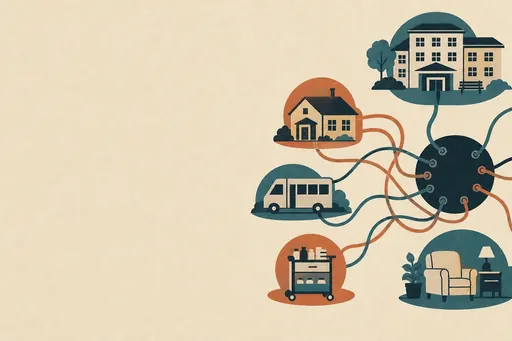
Senior living
Operators say it themselves: integration is the problem, not the number of devices.
Professional services

Legal
That twelve-hour gap is worth roughly two hundred thousand dollars per attorney, per year.

Accounting & consulting
Sixty-six point four percent. And the firms losing least are the ones that stopped relying on memory.
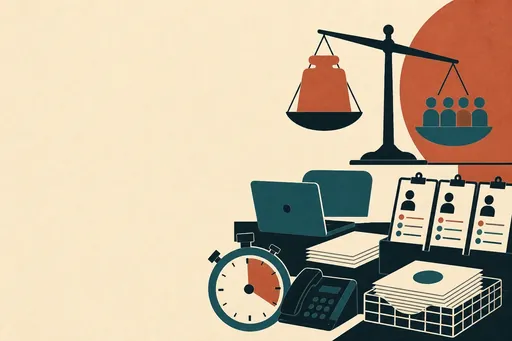
Staffing
Which means your margin depends entirely on how fast and how accurately you fill.
Public sector

Government
The programmes fail for the same reason every time: they try to replace the system instead of relieving the pressure on it.

Defence
Of $10.9 billion allocated across 24 programmes, more than half encountered failure.

Education
Enrolment is holding up today. The intake pool is not. Institutions that cannot see enrolment, retention and cost in one place will decide blind.
Supply chain & industry
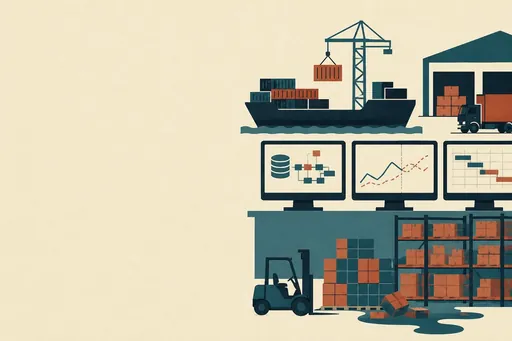
Supply chain
Stockouts and excess inventory persist in organisations that bought every system designed to prevent them.
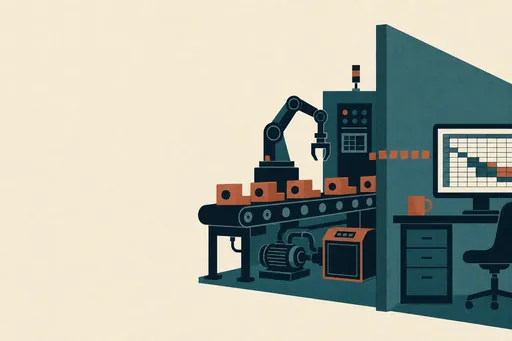
Manufacturing
Production runs on the floor. Reporting runs on a spreadsheet assembled the following morning.

Construction
And the average project still overruns by twenty-eight percent.
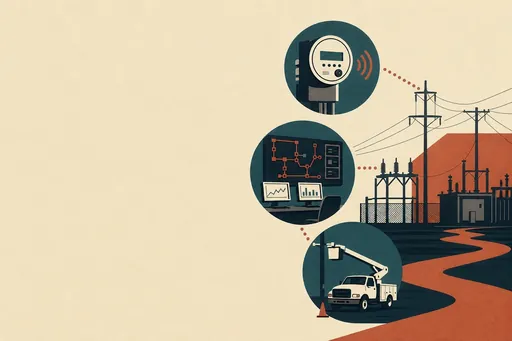
Energy & utilities
Which is why the operation stays reactive when the data to be proactive already exists.

Agriculture & food
FSMA 204, EUDR and retailer GlobalGAP requirements all expect a record you can produce on demand, whenever they land.
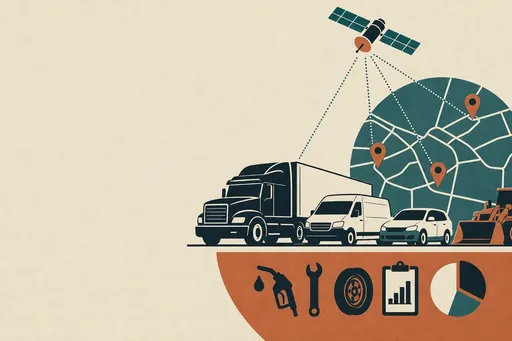
Transport & fleet
Telematics answered the location question a decade ago. The economics question is still open.
The stack changes by market. What we can build does not.
Whether the platform is local or global, the work is the same: read what is there, then make what is missing. In software or in metal.
See everything we build-
 Software
 -
 Hardware
 -
 Ways of working
 -
 Whole ventures
Elsewhere
Operating in more than one of these?
That is the harder and more interesting problem: one operation, several rulebooks. We have built for it.