


the United Kingdom, Ireland and the European Union
Built for how the work runs here.
Strong data protection, strong procurement rules, and a market where a supplier who has read the rule before the meeting stands out immediately.
industries with a verified local stack
of 23 we work in
What we have already read
The rules and regulators behind these pages.
Not a list of things we could look up. These are named on the industry pages below, with what they change about the work.
- UK GDPR
- the Estate Agents Act
- money laundering regulations
- EPC requirements
- the EU GPSR
- extended producer responsibility
- PCI DSS
- Natasha's Law allergen rules
- the Working Time Regulations
- HACCP
- the Employment (Allocation of Tips) Act
- the FCA
- Open Banking (OBIE)
- PSD2 and strong customer authentication
- CASS rules
- the FCA and Consumer Duty
- Solvency II
- Lloyd's market standards
- CQC fundamental standards
- the Care Act 2014
- local authority funding rules
- the DSP Toolkit
- DCB0129 clinical safety
- the EU MDR for software
- the GP contract (QOF)
- NHS Digital data standards
- NHS Continuing Healthcare
- the Mental Health Act
- CQC standards
- NHS Talking Therapies reporting
- the Care Quality Commission ratings
- the SRA Accounts Rules
- the Legal Services Act
- Making Tax Digital
- UK GAAP and FRS 102
- EU e-invoicing mandates
- IR35 off-payroll rules
- the Agency Workers Regulations 2010
- DBS requirements
- the GDS Service Standard
- WCAG 2.2 accessibility
- the Public Records Act
- DEFCON 658 cyber risk
- JSP 440 security
- NATO STANAG interfaces
- Cyber Essentials Plus
- the Office for Students
- HESA data returns
- the Prevent duty
- CDS customs declarations
- EORI registration
- the EU CBAM
- EUDR deforestation rules
- UKCA and CE marking
- the Machinery Regulation
- ISA-95 modelling
- REACH and RoHS
- the Building Safety Act 2022
- CDM 2015
- RIBA work stages
- the golden thread duty
- Ofgem
- the ENTSO-E network codes
- the EU NIS2 directive
- MPAN and MPRN data
- the EUDR deforestation rule
- BRCGS certification
- Natasha's Law
- Red Tractor standards
- EU drivers' hours (561/2006)
- the smart tachograph
- FORS accreditation
- DVSA Earned Recognition
Intelligence, plumbed in
The platforms differ here. The unstructured data problem does not.
Whatever the United Kingdom, Ireland and the European Union runs on, the answer is usually in a note, a letter or a screen. We build the model's route to it: the connector, the semantic layer, the scored test set.
How we make AI survive real data-
 Connectors
 -
 A semantic layer
 -
 Evals you can check
However hard, whatever it is
Whatever runs here, the method is the same.
Local platforms, local rules, and a problem that may be on none of these pages. We sit with you, read everything, take it apart, then build.
-
 01
01 We sit with you
Days where the work happens, not a workshop in a meeting room. We watch the job get done and write down the shortcuts nobody wrote down.
-
 02
02 We read everything
Your data, your rules, your vendors and their documentation, and the published research on your sector. We report what is actually in there.
-
 03
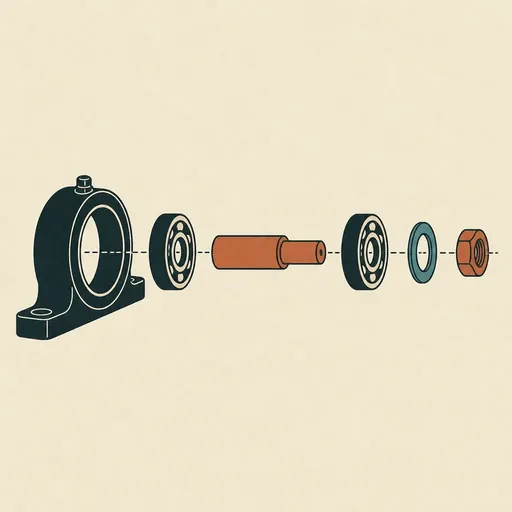
03 We break it to first principles
Not which tool fixes this. What is actually causing it, taken apart until we reach the piece that cannot be divided further.
-
 04
04 Then we build
Weeks, not quarters. By this point we are not guessing what to build, and guessing is the thing that makes projects long.
Industries
Pick the one that sounds like your week.
Commerce & consumer



Financial services


Healthcare

Skilled nursing
Your team is not wrong about the denials. They just do not have four hours per appeal to prove it.

Hospitals
Denials are not a billing problem. They are a documentation problem that surfaces as a billing problem.

Physician groups
Ninety-two percent of practices have hired or reassigned staff purely to keep up with it.

Home health
Caregiver turnover is at 79%. The software you bought was designed around the chart, not the caregiver.

Behavioral health
Not because the software does not exist. Because almost none of it handles 42 CFR Part 2 properly.

Senior living
Operators say it themselves: integration is the problem, not the number of devices.
Professional services

Legal
That twelve-hour gap is worth roughly two hundred thousand dollars per attorney, per year.

Accounting & consulting
Sixty-six point four percent. And the firms losing least are the ones that stopped relying on memory.

Staffing
Which means your margin depends entirely on how fast and how accurately you fill.
Public sector

Government
The programmes fail for the same reason every time: they try to replace the system instead of relieving the pressure on it.

Defence
Of $10.9 billion allocated across 24 programmes, more than half encountered failure.

Education
Enrolment is holding up today. The intake pool is not. Institutions that cannot see enrolment, retention and cost in one place will decide blind.
Supply chain & industry

Supply chain
Stockouts and excess inventory persist in organisations that bought every system designed to prevent them.

Manufacturing
Production runs on the floor. Reporting runs on a spreadsheet assembled the following morning.

Construction
And the average project still overruns by twenty-eight percent.

Energy & utilities
Which is why the operation stays reactive when the data to be proactive already exists.

Agriculture & food
FSMA 204, EUDR and retailer GlobalGAP requirements all expect a record you can produce on demand, whenever they land.

Transport & fleet
Telematics answered the location question a decade ago. The economics question is still open.
The stack changes by market. What we can build does not.
Whether the platform is local or global, the work is the same: read what is there, then make what is missing. In software or in metal.
See everything we build-
 Software
 -
 Hardware
 -
 Ways of working
 -
 Whole ventures
Elsewhere
Operating in more than one of these?
That is the harder and more interesting problem: one operation, several rulebooks. We have built for it.