

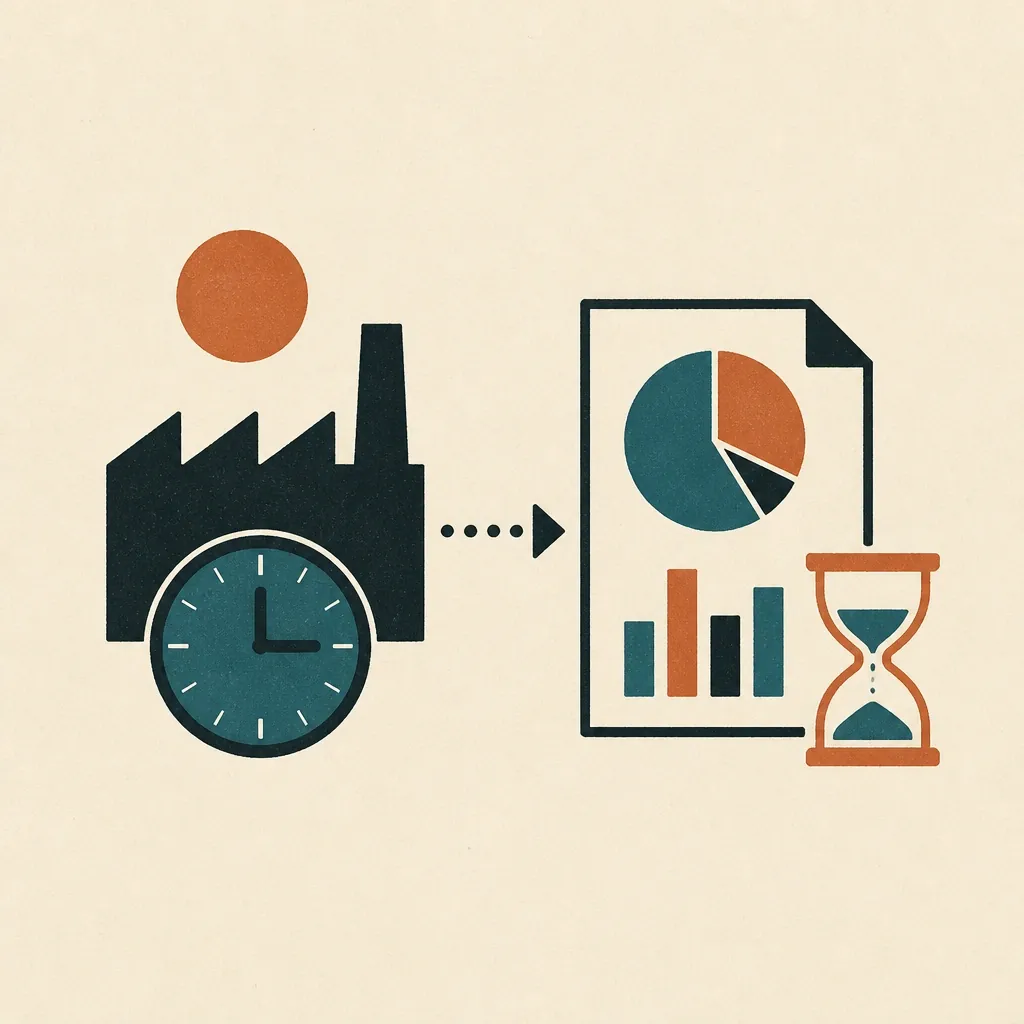
OEE is calculated after the shift, not during it
By the time downtime is visible in a report, the shift is over and the cause is a memory.
Supply chain & industry · Middle East
Production runs on the floor. Reporting runs on a spreadsheet assembled the following morning.
manufacturing industry groups saw labour productivity decline over the latest published year.
Source: BLS: Productivity and Costs by Industry, Manufacturing and Mining
In the Gulf
Platforms in this market
Rules that apply here
We read the rule before the call. It is the cheapest way to prove we did the work.
What is happening
By the time downtime is visible in a report, the shift is over and the cause is a memory.
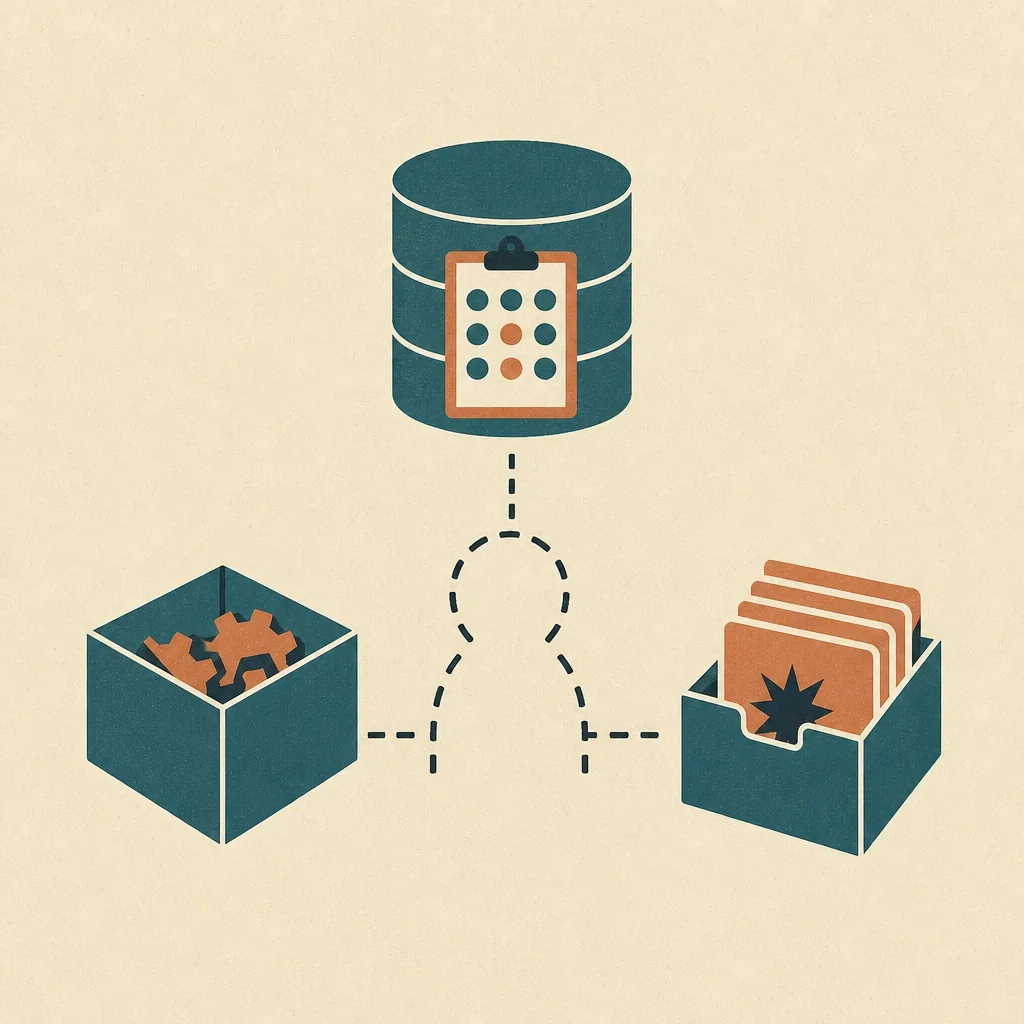
Inspection results in one system, scrap in another, customer complaints in a third. The link between them is a person.
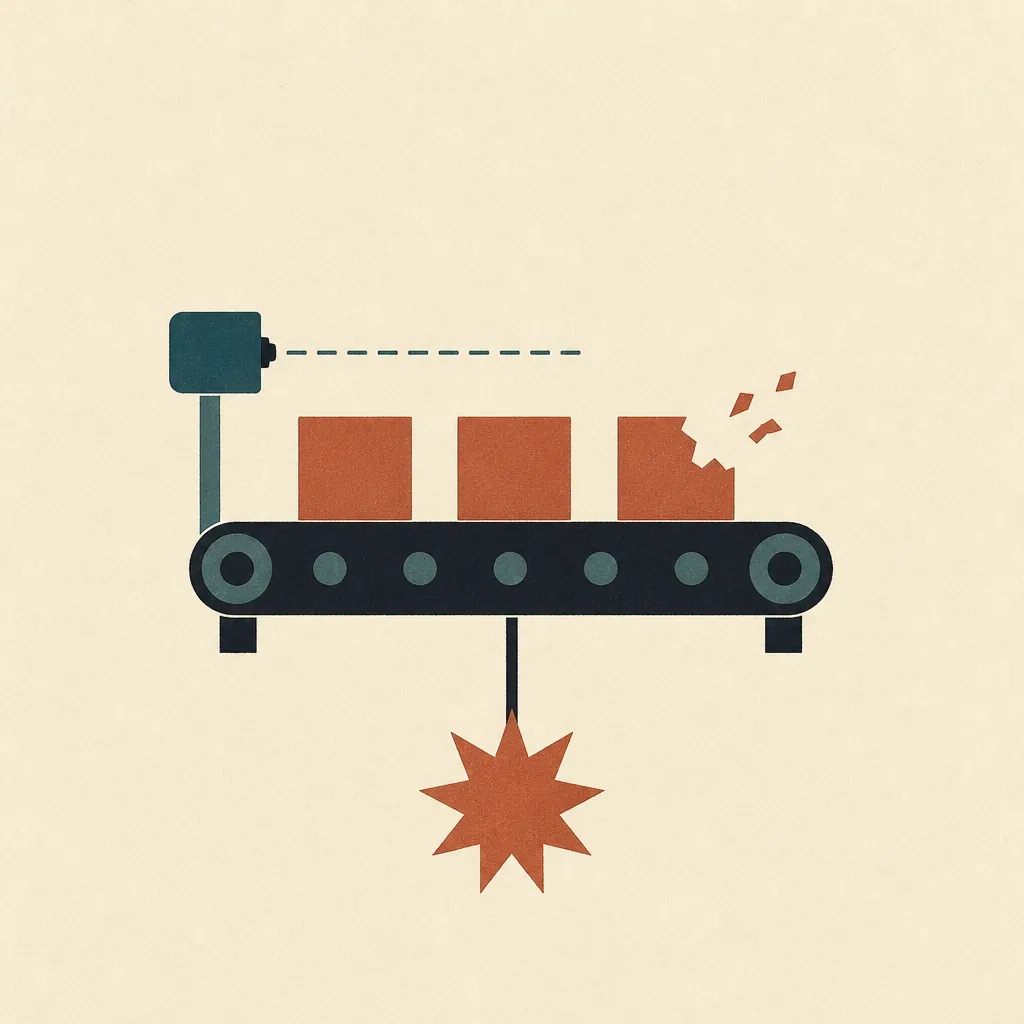
Sensors exist on newer lines. The data does not reach anyone before the failure does.

When a customer asks which batches contained a suspect lot, the answer takes days and a lot of manual searching.
However hard, whatever it is
We wrote this about the shop floor seeing what the line already knows. If yours is quality, changeover or a supplier nobody can measure, same job.
 01
01 Days where the work happens, not a workshop in a meeting room. We watch the job get done and write down the shortcuts nobody wrote down.
 02
02 Your data, your rules, your vendors and their documentation, and the published research on your sector. We report what is actually in there.
 03
03 Not which tool fixes this. What is actually causing it, taken apart until we reach the piece that cannot be divided further.
 04
04 Weeks, not quarters. By this point we are not guessing what to build, and guessing is the thing that makes projects long.
Where we sit
What you get
Built new for you — none of this exists in your stack today
What you already run — unchanged, and still yours
If the machine shows it, we can read it. If it has no port, we build one. PLC tags, OPC-UA, a panel meter with nothing but a display. And where there is nothing, a sensor we make.
 No API
  No documentation
  A terminal from 1994
  It arrives as paper
  The vendor said no
  It reports nothing
 Not a list of limits. Name yours on the call.
And once we can reach it, a model can read it. Most of the value here is in the sources nobody ever structured — the note, the letter, the screen.
Intelligence, plumbed in
The build is a machine connector, one fault vocabulary across lines, and a test set of failures you have already had.
How we make AI survive real data Connectors
 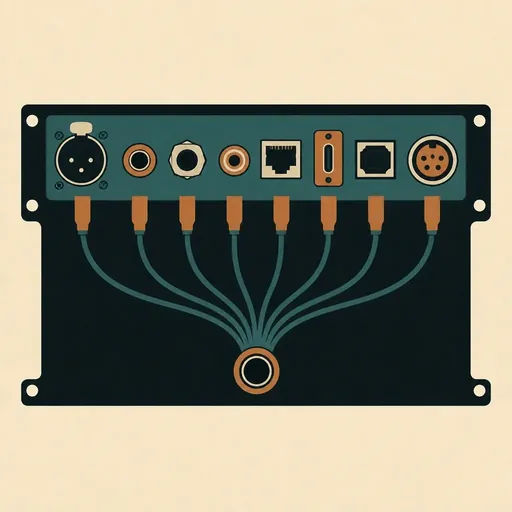 A semantic layer
 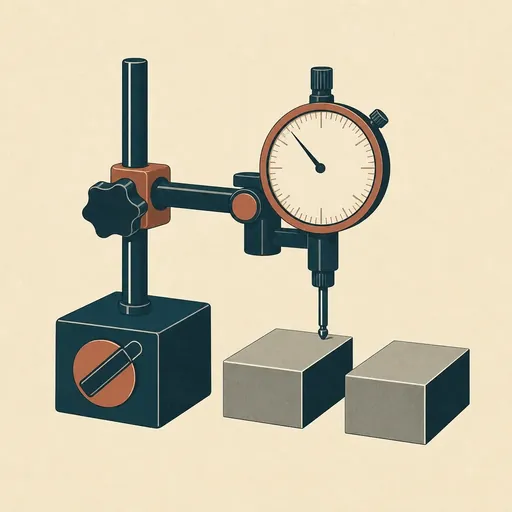 Evals you can check
 What changes
 Live
Live Downtime, cycle time and scrap as they happen, attributed to line, shift and cause.
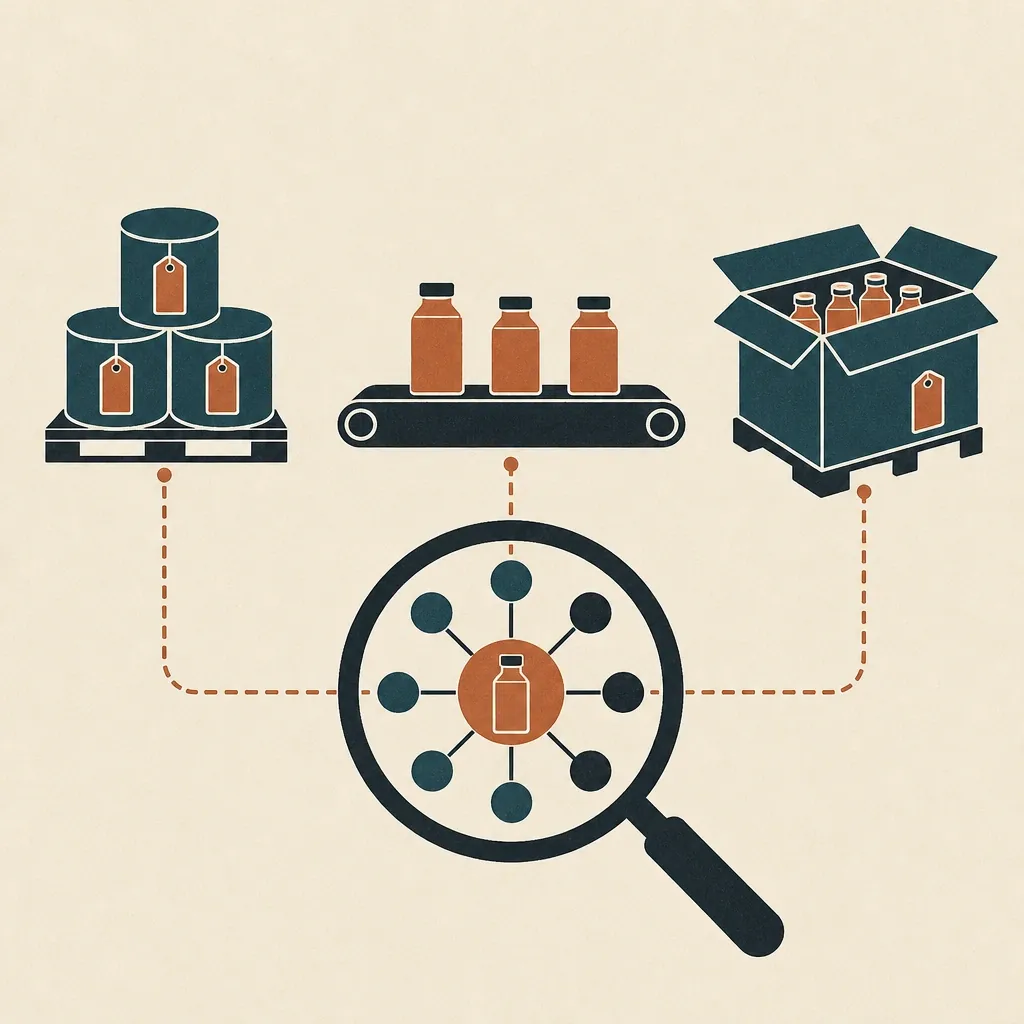 Traced
 Raw lot to finished unit to customer shipment, queryable rather than reconstructed.
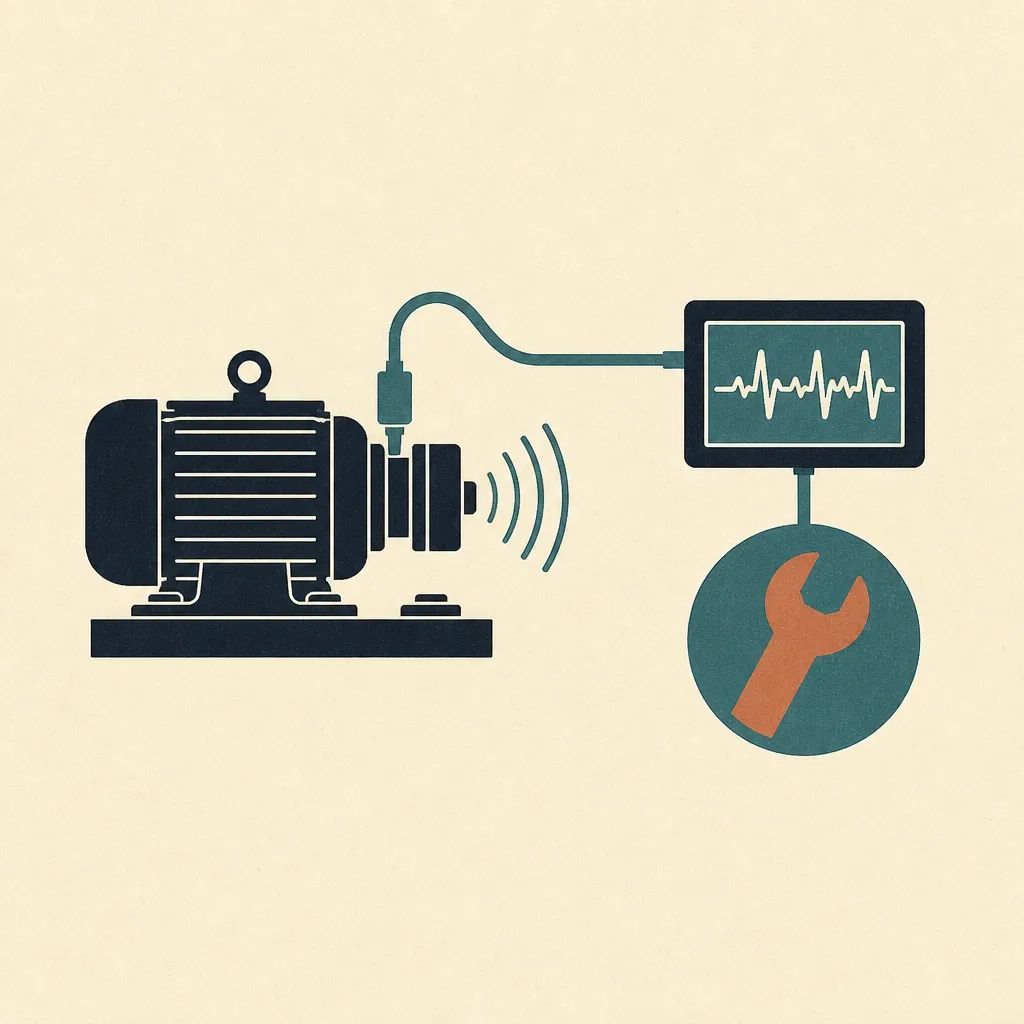 Predicted
 Using the sensor data already being generated and currently discarded.
Who this is for
 Plant Manager
  Operations Director
  Quality Head
  Maintenance Manager
  Supply Chain Director
 Straight answers
Usually, yes. Older equipment can be read through PLC interfaces, retrofitted sensors or edge devices without touching the control system. We have built embedded and sensor firmware as well as the software above it, which matters when the answer is 'it depends on the machine'.
No. We read from them and build the operational layer above, which is faster to deploy and does not put production at risk.
Carefully and with your controls engineers. Read-only wherever possible, segmented from the control network, and never a component that production depends on to run.

Yes. The log and the fault code describe the same event. We test against failures you have already had before the floor relies on it.
For manufacturing that means ESMA and SASO conformity, In-Country Value programmes and ADNOC vendor standards. We read the rule before the call, so the first meeting is about your operation rather than about us catching up.
What you already run stays where it is. Around it we build software, hardware and the process itself. Here that means a sensor and enclosure we build when the machine has no port.
See everything we build Software
 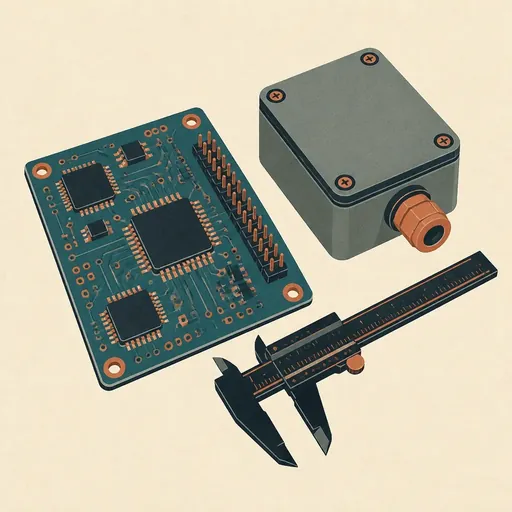 Hardware
  Ways of working
  Whole ventures
 Honest about the numbers
We have not localised it, because a number nobody can check is worth less than a real one plus this sentence. The pattern travels. The size of it in your market is a question for the call.
Same industry, other markets