

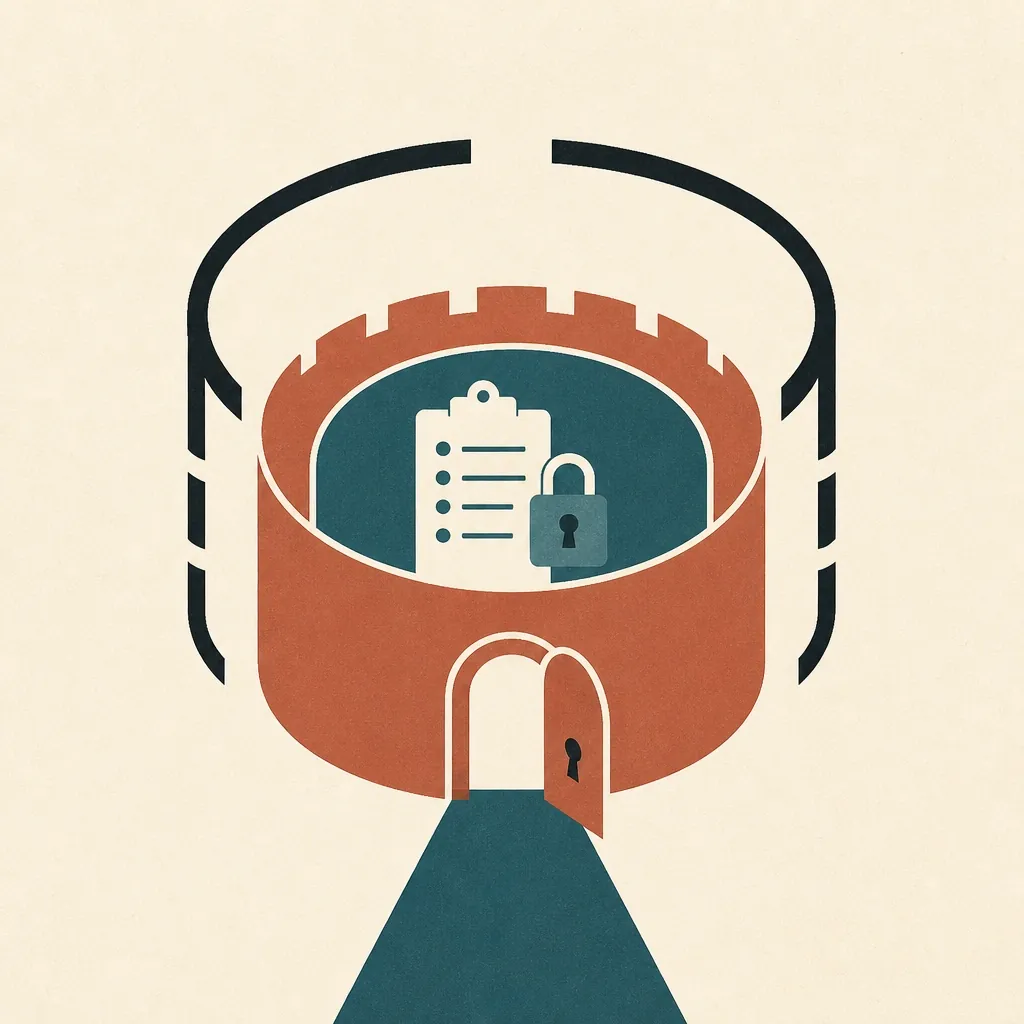
42 CFR Part 2 goes well beyond HIPAA
Consent and disclosure rules for substance use treatment are stricter and go into more detail. Most generalist platforms simply do not model them, so staff work around the system.

Healthcare · UK & Europe
Not because the software does not exist. Because almost none of it handles 42 CFR Part 2 properly.
substance use and mental health treatment facilities use a mix of electronic records and paper charts.
Source: ONC data brief: EHR adoption among substance use and mental health treatment facilities, 2024
In the UK and Europe
Platforms in this market
Rules that apply here
We read the rule before the call. It is the cheapest way to prove we did the work.
What is happening
Consent and disclosure rules for substance use treatment are stricter and go into more detail. Most generalist platforms simply do not model them, so staff work around the system.

Medicaid managed care, commercial, and county-funded contracts in the same building, each with different authorisation rules, documentation standards and billing formats.

Residential needs bed and census management, withdrawal documentation, eMAR and billing that survives utilisation review. Day programmes live on group documentation and attendance-driven billing.

Continued-stay authorisations require clinical justification assembled by hand, repeatedly, for the same patient.
However hard, whatever it is
This page is about one view across the client record. If your problem is intake, staffing or a payer who keeps saying no, that is the same work.
 01
01 Days where the work happens, not a workshop in a meeting room. We watch the job get done and write down the shortcuts nobody wrote down.
 02
02 Your data, your rules, your vendors and their documentation, and the published research on your sector. We report what is actually in there.
 03
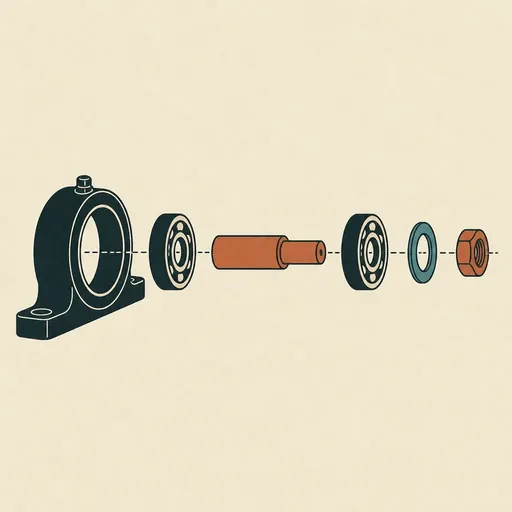
03 Not which tool fixes this. What is actually causing it, taken apart until we reach the piece that cannot be divided further.
 04
04 Weeks, not quarters. By this point we are not guessing what to build, and guessing is the thing that makes projects long.
Where we sit
What you get
Built new for you — none of this exists in your stack today
What you already run — unchanged, and still yours
If a clinic records it, we can reach it. An EHR with no API, a fax that still arrives, a spreadsheet a counsellor keeps. All of it can be joined.
 No API
  No documentation
  A terminal from 1994
  It arrives as paper
  The vendor said no
  It reports nothing
 Not a list of limits. Name yours on the call.
And once we can reach it, a model can read it. Most of the value here is in the sources nobody ever structured — the note, the letter, the screen.
Intelligence, plumbed in
So we build retrieval over the notes, with consent rules enforced in the layer, not left to whoever writes the prompt.
How we make AI survive real data Connectors
  A semantic layer
  Evals you can check
 What changes
 Consent modelled
 Consent scope, expiry and redisclosure enforced in code, with an audit trail that holds up.
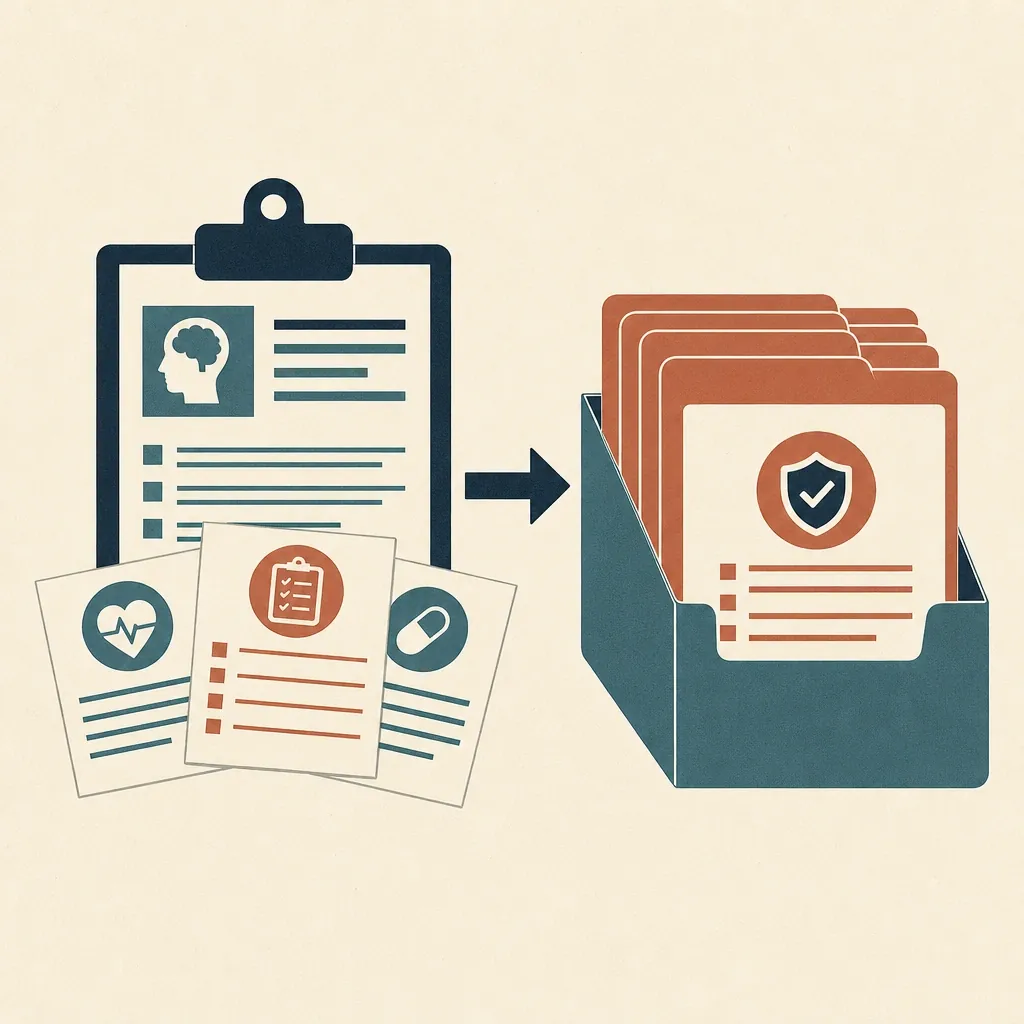 Authorisations
 The clinical justification pulled together rather than rewritten every review cycle.
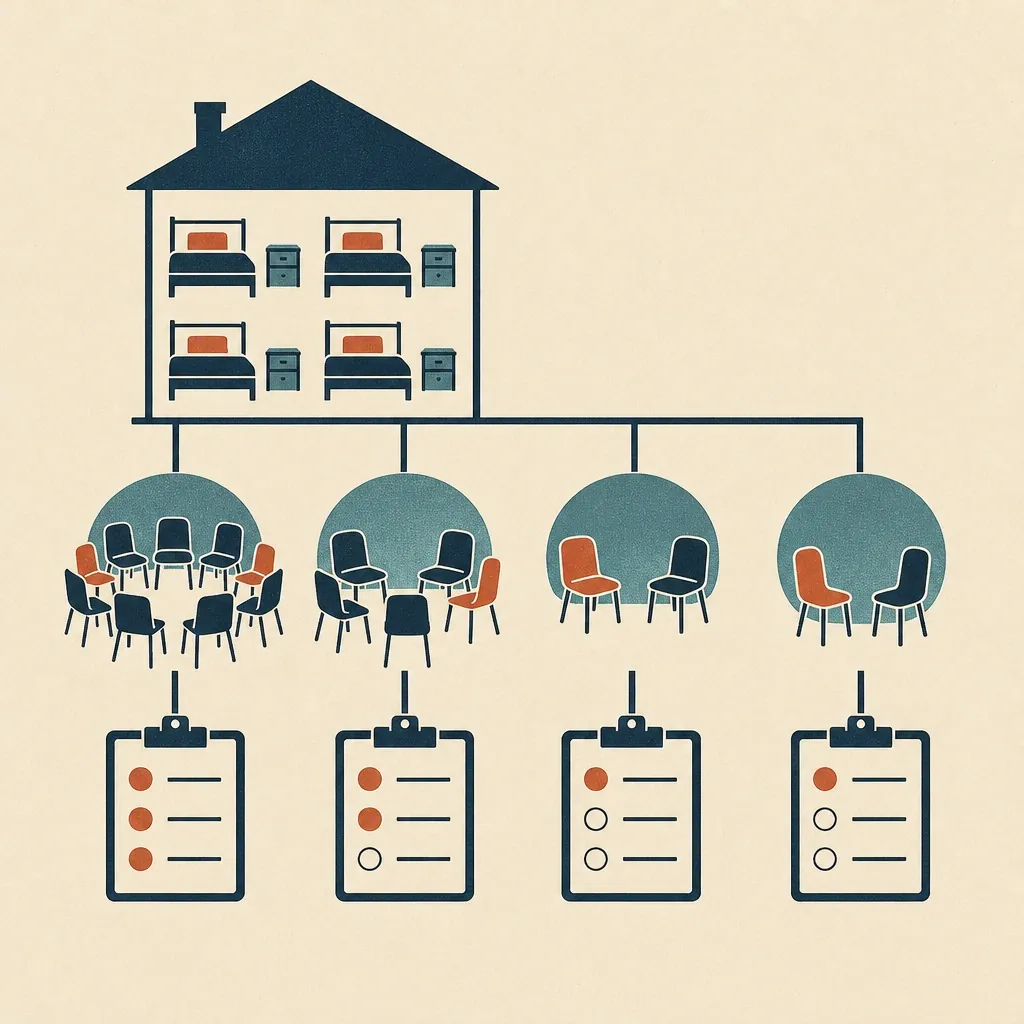 One census
 Across residential, PHP, IOP and outpatient, with billing that reflects what actually happened.
Who this is for
 Executive Director
  Clinical Director
  Utilisation Review Manager
  Billing Manager
  Compliance Officer
 Straight answers

Yes, and we treat it as a data-model problem rather than a policy document. Consent scope, duration and redisclosure rules have to be enforced by the system. If they live in a staff handbook, they will be broken under pressure.

One operational layer can, provided it models them differently underneath. Residential is a census and medication problem; day programmes are an attendance and group-documentation problem. Treating them identically is why most platforms fit neither.

With a free 20-minute call. If it looks like a fit, we then read your data and show you what your payer mix actually needs against what your system records. We agree that price with you first.

Only if consent is enforced in the layer, not in the prompt. We build it that way. The model sees nothing a rule has not cleared.
For behavioral health that means the Mental Health Act, UK GDPR, CQC standards and NHS Talking Therapies reporting. We read the rule before the call, so the first meeting is about your operation rather than about us catching up.
What you already run stays where it is. Around it we build software, hardware and the process itself. Here that means a phone check-in a client can finish in a minute.
See everything we build Software
  Hardware
  Ways of working
  Whole ventures
 Honest about the numbers
We have not localised it, because a number nobody can check is worth less than a real one plus this sentence. The pattern travels. The size of it in your market is a question for the call.
Same industry, other markets