

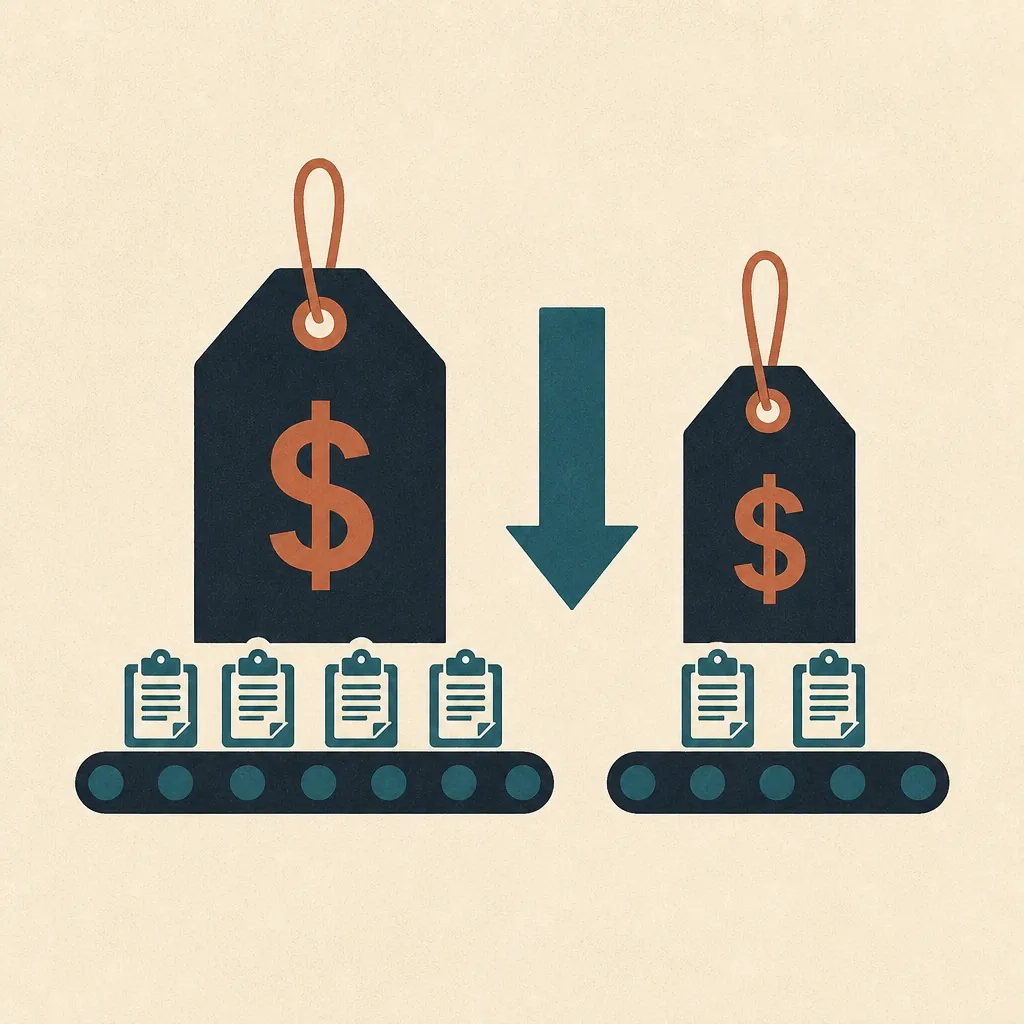
30-40% Cost per claim reduction is available
Carriers that have automated the claim workflow operate at $25 to $36 per claim against an industry norm of $40 to $60.

Financial services · UK & Europe
Tracing a discrepancy back through policy admin, bordereaux and carrier statements has no automated equivalent at any accessible price.
property and casualty combined ratio, meaning the industry paid out more than it took in on underwriting.
In the UK and Europe
Platforms in this market
Rules that apply here
We read the rule before the call. It is the cheapest way to prove we did the work.
What is happening
Carriers that have automated the claim workflow operate at $25 to $36 per claim against an industry norm of $40 to $60.

Commission due versus commission paid. Premium written versus premium collected. Bordereaux against carrier statements. Reinsurance settlement. All manual, all monthly.

Policy admin, the bordereau spreadsheet and the carrier statement, with no shared identifier between them.

Cycle time by stage, first-pass processing rate and straight-through rate are measurable. Most operations measure none of them.
However hard, whatever it is
We wrote this about settlement matching. If yours is claims triage, broker onboarding or a solvency return, the method is the same.
 01
01 Days where the work happens, not a workshop in a meeting room. We watch the job get done and write down the shortcuts nobody wrote down.
 02
02 Your data, your rules, your vendors and their documentation, and the published research on your sector. We report what is actually in there.
 03
03 Not which tool fixes this. What is actually causing it, taken apart until we reach the piece that cannot be divided further.
 04
04 Weeks, not quarters. By this point we are not guessing what to build, and guessing is the thing that makes projects long.
Where we sit
What you get
Built new for you — none of this exists in your stack today
What you already run — unchanged, and still yours
However the broker sends it, we can read it. A bordereau with the columns moved, a PDF statement, a legacy policy screen. All of it can be matched.
 No API
  No documentation
  A terminal from 1994
  It arrives as paper
  The vendor said no
  It reports nothing
 Not a list of limits. Name yours on the call.
And once we can reach it, a model can read it. Most of the value here is in the sources nobody ever structured — the note, the letter, the screen.
Intelligence, plumbed in
We build the mapping, hold it in a semantic layer rather than in a script, and score it against settled months.
How we make AI survive real data Connectors
  A semantic layer
  Evals you can check
 What changes
 Reconciled
 Across policy admin, bordereaux and carrier statements, with discrepancies traced to the policy rather than to a total.
 Cycle time
 Straight-through processing where the data supports it, and a ranked queue where it does not.
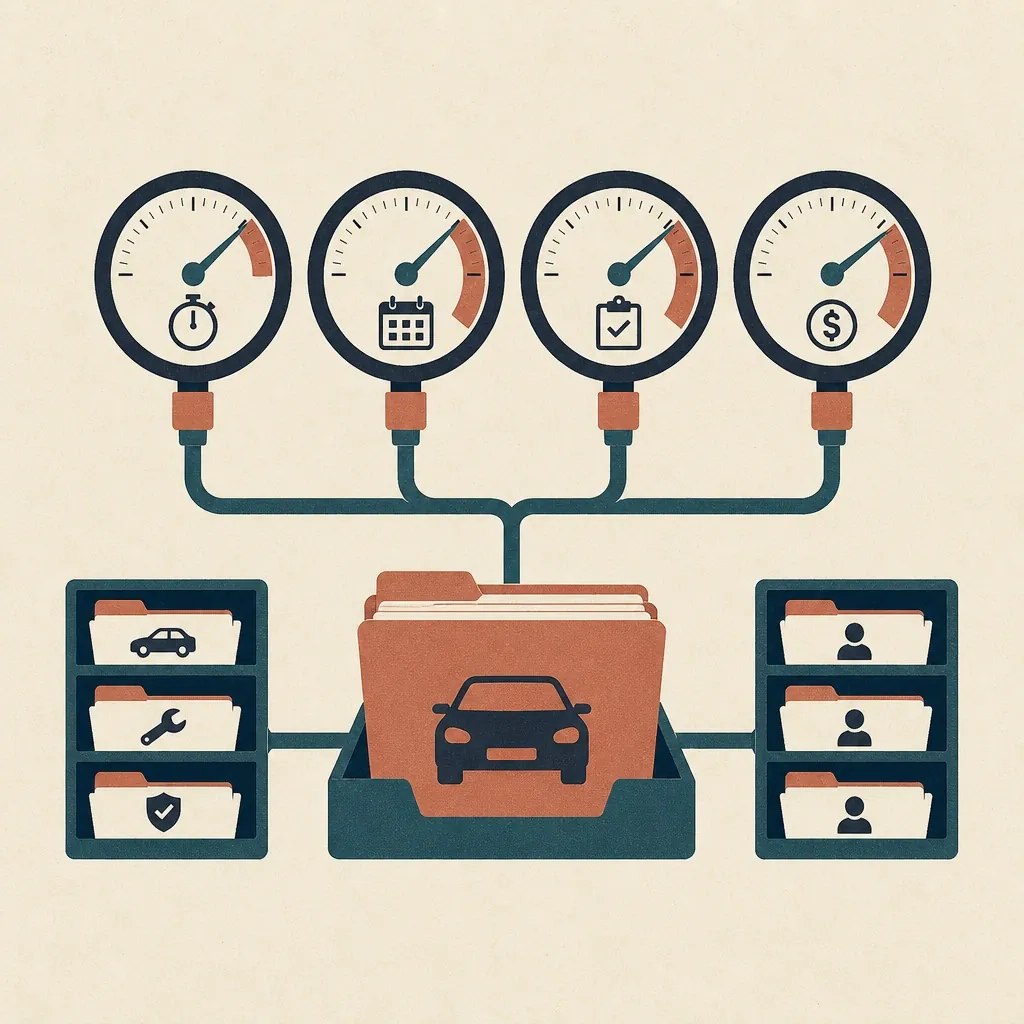 Measured
 Handle time, FNOL-to-first-action, first-pass rate and cost per claim, by stage and by handler.
Who this is for
 Chief Operating Officer
  Head of Claims
  Finance Director
  Head of Underwriting Operations
  Compliance Manager
 Straight answers

It is the normal case, and it is the actual work. A system that only handles a clean standard format solves the easy ten percent. Handling the twelve real formats, including the one that changes every quarter, is what makes it useful.

Yes. We build alongside the policy and claims platform rather than replacing it, integrating through their APIs and data exports.

A free call first. Then we look at your real reconciliation breaks and claim times. If the numbers justify a build, we quote a fixed price before starting.

Yes. The mapping lives in a semantic layer, not in a script, and it is scored against months you have already settled.
For insurance that means the FCA and Consumer Duty, Solvency II, Lloyd's market standards and UK GDPR. We read the rule before the call, so the first meeting is about your operation rather than about us catching up.
What you already run stays where it is. Around it we build software, hardware and the process itself. Here that means a reader that takes any broker sheet, however it is laid out.
See everything we build Software
  Hardware
  Ways of working
  Whole ventures
 Honest about the numbers
We have not localised it, because a number nobody can check is worth less than a real one plus this sentence. The pattern travels. The size of it in your market is a question for the call.
Same industry, other markets