

Building productivity rose. Highways and bridges went backwards
Why is our productivity falling when the industry says it is improving?
Figures and rules on this page apply to
United States
Working somewhere else? The shape of the problem usually travels. The deadlines do not.
What this looks like
The trade press says construction productivity is finally improving, and your own numbers say otherwise. Both are true, because the improvement is concentrated in work that is nothing like yours. Meanwhile the thing that actually slows your crews is a drawing revision nobody on site received, and no productivity statistic has ever measured that.

The numbers
Every figure here is someone else’s. Check them.
- 2019-24the period in which highway, street and bridge productivity declined
- 2007-19the prior period, in which that same work showed almost no change at all
- Upindustrial building productivity across both measured periods
- Down then upresidential productivity: falling through 2007-19, rising across 2019-24
Why it happens
It is not a people problem.
An industry average hides a split, and the split is the useful part. Work that repeats and is done indoors has improved. Work that is bespoke, outdoors and coordinated across many parties has not. That second description is a coordination problem rather than a machinery problem, and coordination is exactly what nobody measures.
Why your current software has not fixed it
Because it was never built to.
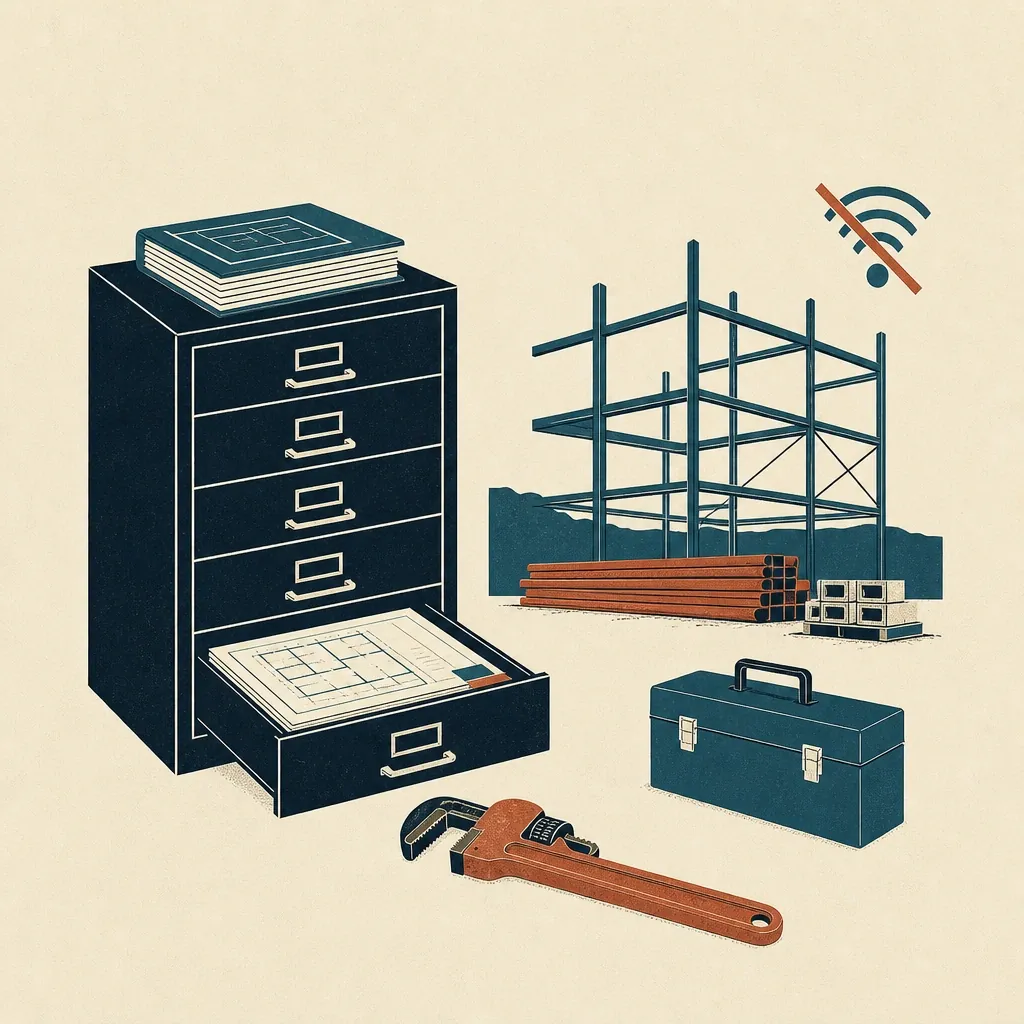
Your project platform is excellent at the document of record: drawings, RFIs, submittals, all versioned and auditable. What it cannot do is get the current revision to the person holding the tool. Not on a site with no signal, at the moment they needed it. That last few metres is a field problem, and a document management system is not a field product.
Intelligence, plumbed in
A marked-up drawing and a delivery note in a cab are both readable now.
The build is an offline site tool that flags a superseded drawing. Then delivery and labour joined to the programme, and a camera post. Underneath it: a connector, one agreed meaning per field, and a test set scored on your own records.
How we make AI survive real data-
 Connectors
 -
 A semantic layer
 -
 Evals you can check
However hard, whatever it is
Productivity is one example. Bring the thing actually eating margin.
We wrote this up because the official data makes the split checkable. If yours is procurement, plant or subcontractor performance, we start the same way.
-
 01
01 We sit with you
Days where the work happens, not a workshop in a meeting room. We watch the job get done and write down the shortcuts nobody wrote down.
-
 02
02 We read everything
Your data, your rules, your vendors and their documentation, and the published research on your sector. We report what is actually in there.
-
 03
03 We break it to first principles
Not which tool fixes this. What is actually causing it, taken apart until we reach the piece that cannot be divided further.
-
 04
04 Then we build
Weeks, not quarters. By this point we are not guessing what to build, and guessing is the thing that makes projects long.
What we build
Specific enough to argue with.
Four mechanisms, not four features. Each one is a thing that happens on its own, every day, whether or not anyone remembers to run it.
-
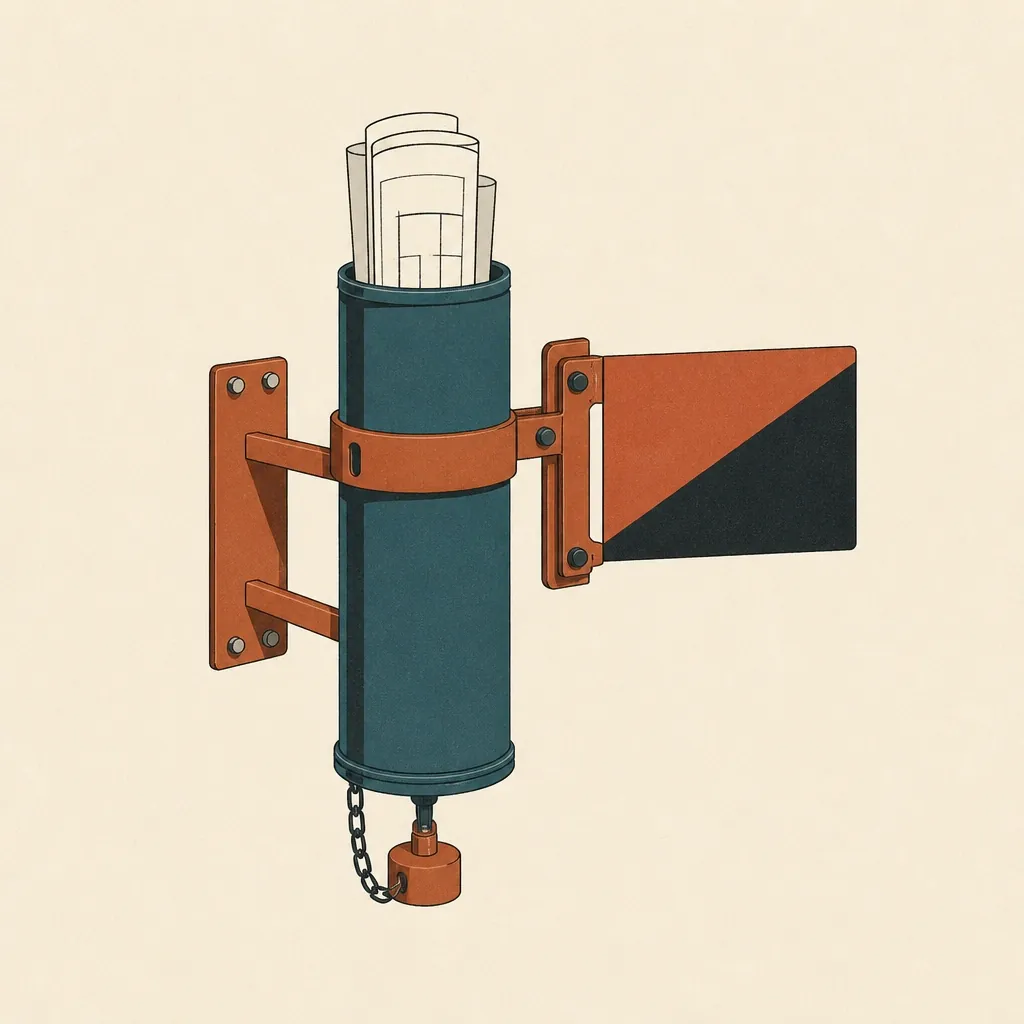
A site tool that holds the current drawing set offline and tells a crew when what they are holding has been superseded.
-
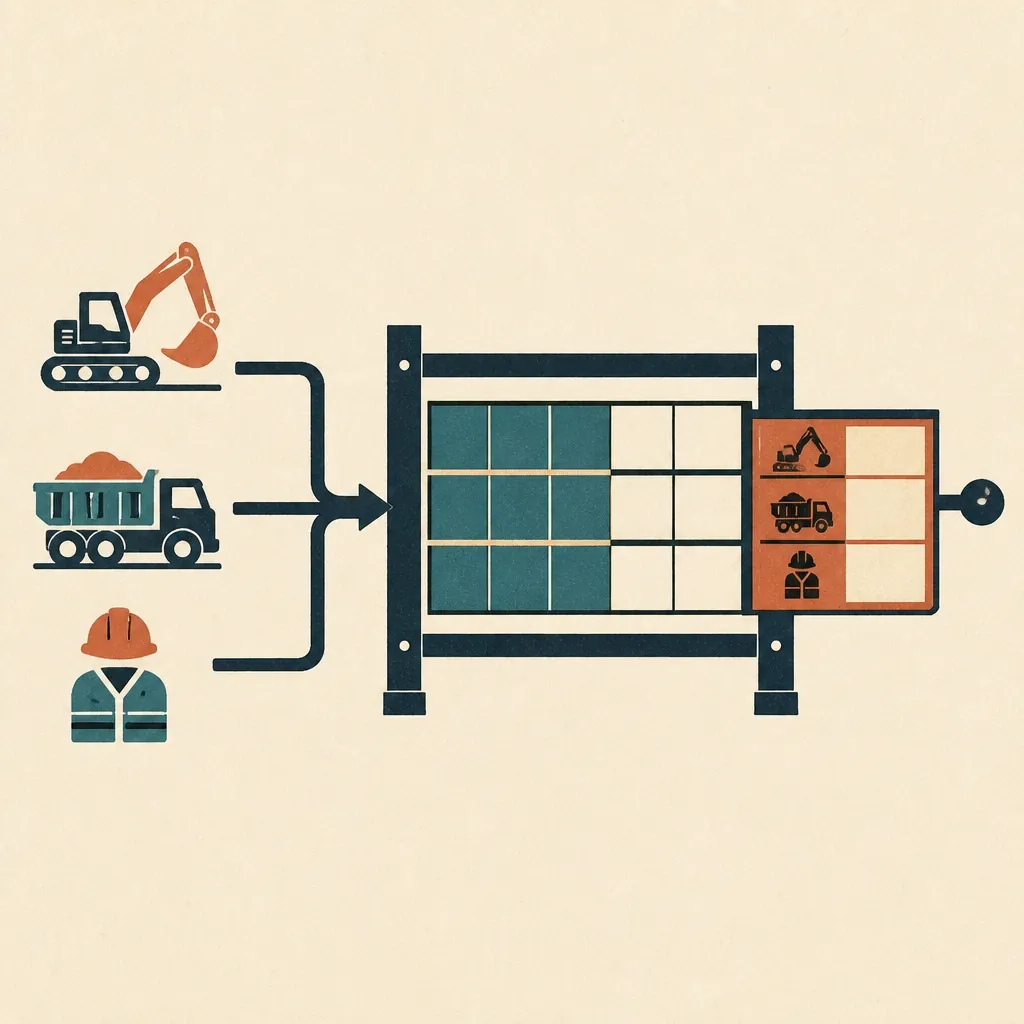
Delivery, plant and labour joined to the programme, so a slip is visible on the day rather than at the monthly report.
-
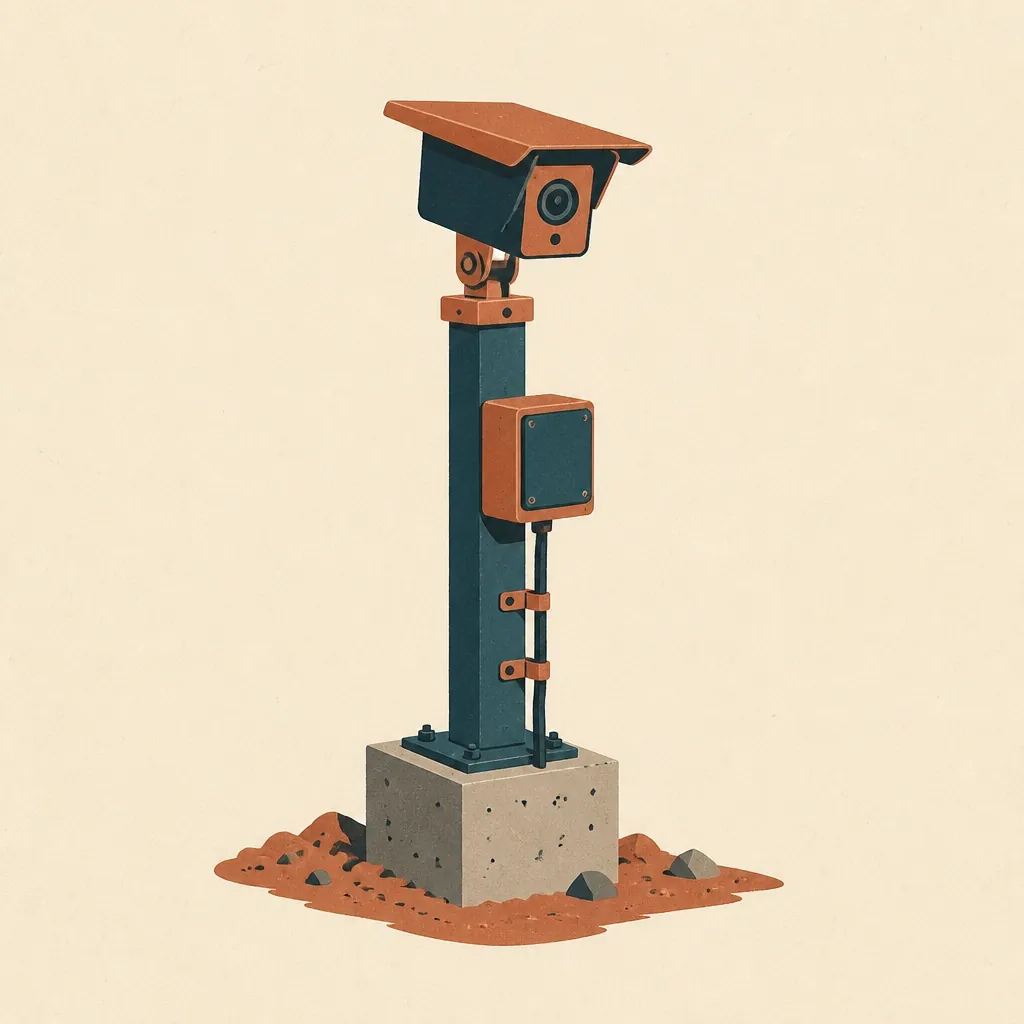
A camera post that records progress without anybody remembering to, because the record nobody keeps is the record that matters in a claim.
-
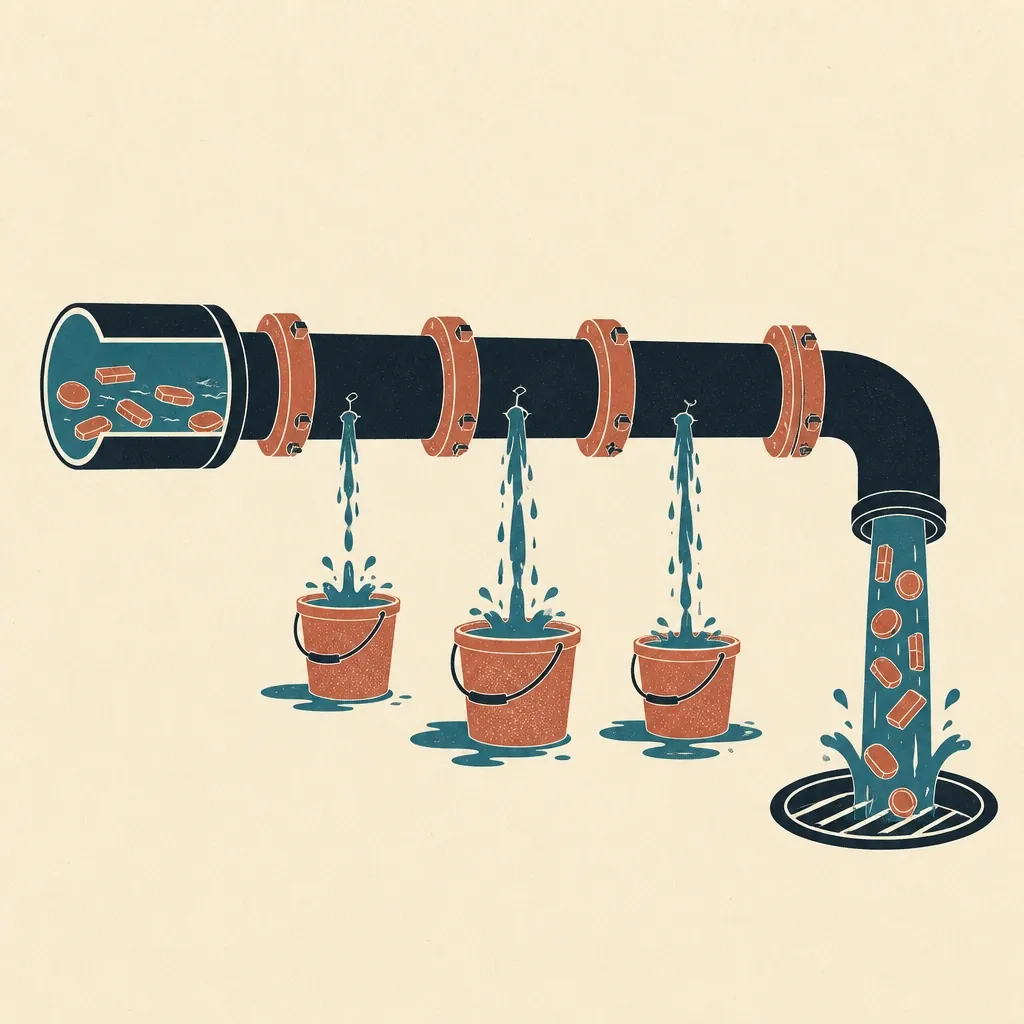
A weekly one-pager showing where cost is actually leaking, in language a site manager will read.
How you would know it worked
Numbers in your own reporting, not ours.
- Share of crews working from the current revision, sampled rather than assumed.
- Days from a programme slip occurring to it appearing in a report.
- Rework hours booked against a cause, rather than into a general pot.
Straight answers
Where a model is involved, it is scored against your own records first. Accuracy per source, not one flattering average.
The questions this raises
-
Our productivity numbers look fine. Why does this matter?
Check which category you are in. The published improvement is concentrated in repeatable indoor work; bespoke outdoor work moved the other way, and an industry average mixes the two.
-
Does this replace our project platform?
No. It reads it. The platform stays the document of record and we build the last few metres to the person holding the tool.
-
Our sites have no signal.
That is the normal case and it is designed for. The field tool works offline and reconciles when it returns, because a basement is where the drawing question actually gets asked.
-
Can this help with a claim?
Usually yes, because most of what a claim needs is a record nobody kept. Capturing it as it happens is far cheaper than piecing it back together later.
Where the figures come from
We did not make these up, and you should not take our word for them.
Somebody noticed first, and nothing consumed it
The earliest warning is a note in a box nothing reads.
A driver, a fitter, an engineer or an adviser saw it coming and wrote it down. It went into free text. Free text does not trigger anything, does not add up, and never tells you that four people reported the same thing this week.
- EducationEnrolment is up this year. The intake pool peaked last year
- Energy & utilitiesMajor events now cost more outage hours than every ordinary year combined
- ManufacturingProductivity fell in fourteen of the twenty manufacturing groups measured
- StaffingFive million people hired and five million separated in the same month
- Transport & fleetMore than a third of crashed trucks already had out-of-service defects
Different work, same box nobody reads. Whatever your people notice first, it is being written down somewhere already.Tell us what yours write down.
The published improvement is in repeatable indoor work. Yours may not be.
The build is an offline site tool that flags a superseded drawing. Then delivery and labour joined to the programme, and a camera post.
See everything we build-
 Software
 -
 Hardware
 -
 Ways of working
 -
 Whole ventures
Is this happening to you? Tell us the size of it.
Twenty minutes. We will tell you honestly whether the numbers justify doing anything about it.