

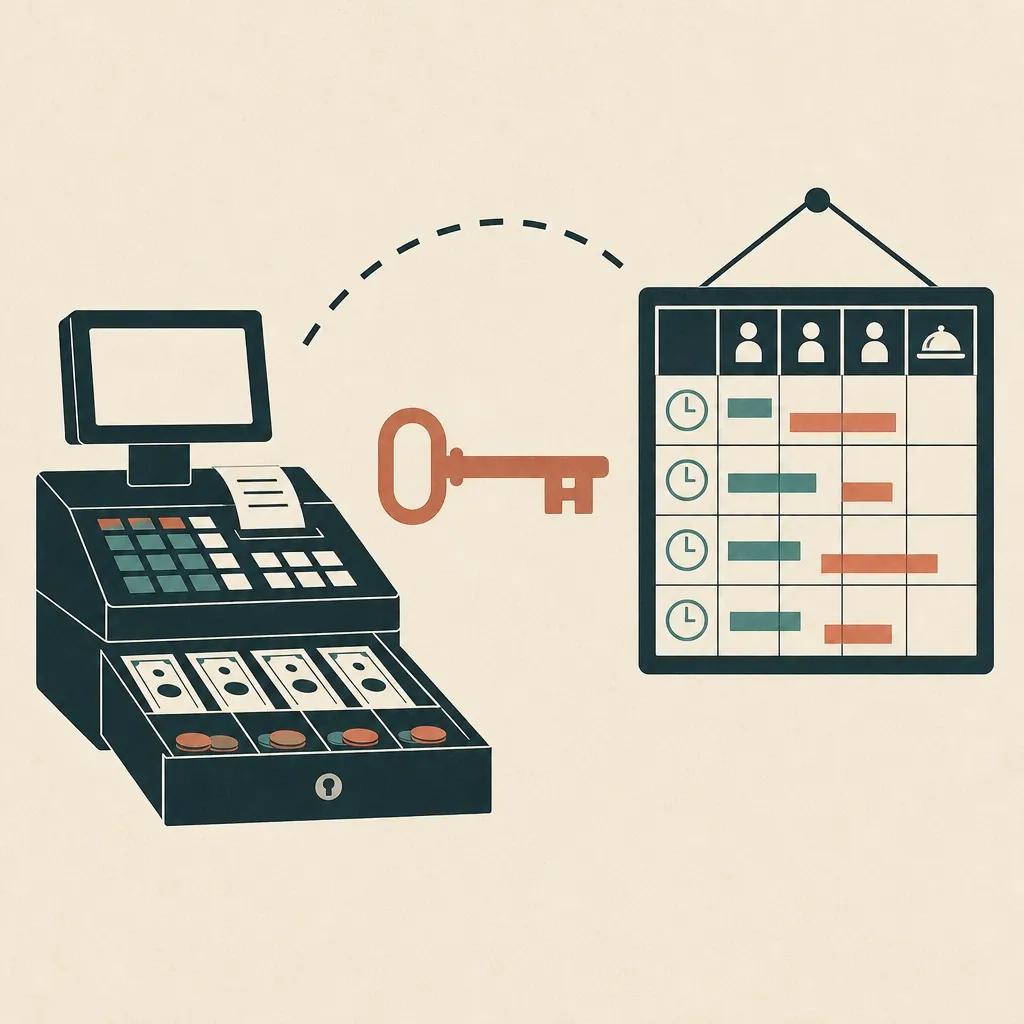
The roster was set last Tuesday. The covers were not
How do we match labour cost to actual trade instead of to last week's guess?
Figures and rules on this page apply to
United States
Working somewhere else? The shape of the problem usually travels. The deadlines do not.
What this looks like
Friday's roster goes up on Tuesday. By Thursday two people have dropped. One section is over-staffed and another is short, and a manager spends the shift on the phone. On Monday the payroll number arrives and nobody can say which hour of which day it came from.

The numbers
Every figure here is someone else’s. Check them.
- -148,000change in sector job openings in a single month, showing how fast the labour picture moves
Why it happens
It is not a people problem.
Labour is the one large cost that has to be committed before the revenue it serves is known. A roster is a forecast, and it is usually written from last week. The things that actually predict this week sit elsewhere: the bookings, the weather, the event down the road, the delivery promotions. The forecast is not wrong because managers are careless. It is wrong because the inputs are in four places and the roster is due now.
Why your current software has not fixed it
Because it was never built to.
The till knows the covers and the rota tool knows the hours, and they are separate products with separate owners. A POS is built to take money accurately, which it does. It is not built to be a forecasting input, and exporting from it is an afterthought. The scheduling tool, in turn, optimises the hours it is given against rules, not against demand it cannot see. Each product is good at its half. The join is nobody's product.
Intelligence, plumbed in
Every supplier invoice is laid out differently. All of them are readable.
The build is a daily labour-against-sales sheet and a roster suggestion from real demand. Plus a door counter we make where the till cannot see footfall. Underneath it: a connector, one agreed meaning per field, and a test set scored on your own records.
How we make AI survive real data-
 Connectors
 -
 A semantic layer
 -
 Evals you can check
However hard, whatever it is
Labour cost is one example. Bring the thinner margin.
Labour is the biggest controllable line, so it is the one we wrote up. If yours is waste, rent or a delivery platform, the approach does not change.
-
 01
01 We sit with you
Days where the work happens, not a workshop in a meeting room. We watch the job get done and write down the shortcuts nobody wrote down.
-
 02
02 We read everything
Your data, your rules, your vendors and their documentation, and the published research on your sector. We report what is actually in there.
-
 03
03 We break it to first principles
Not which tool fixes this. What is actually causing it, taken apart until we reach the piece that cannot be divided further.
-
 04
04 Then we build
Weeks, not quarters. By this point we are not guessing what to build, and guessing is the thing that makes projects long.
What we build
Specific enough to argue with.
Four mechanisms, not four features. Each one is a thing that happens on its own, every day, whether or not anyone remembers to run it.
-
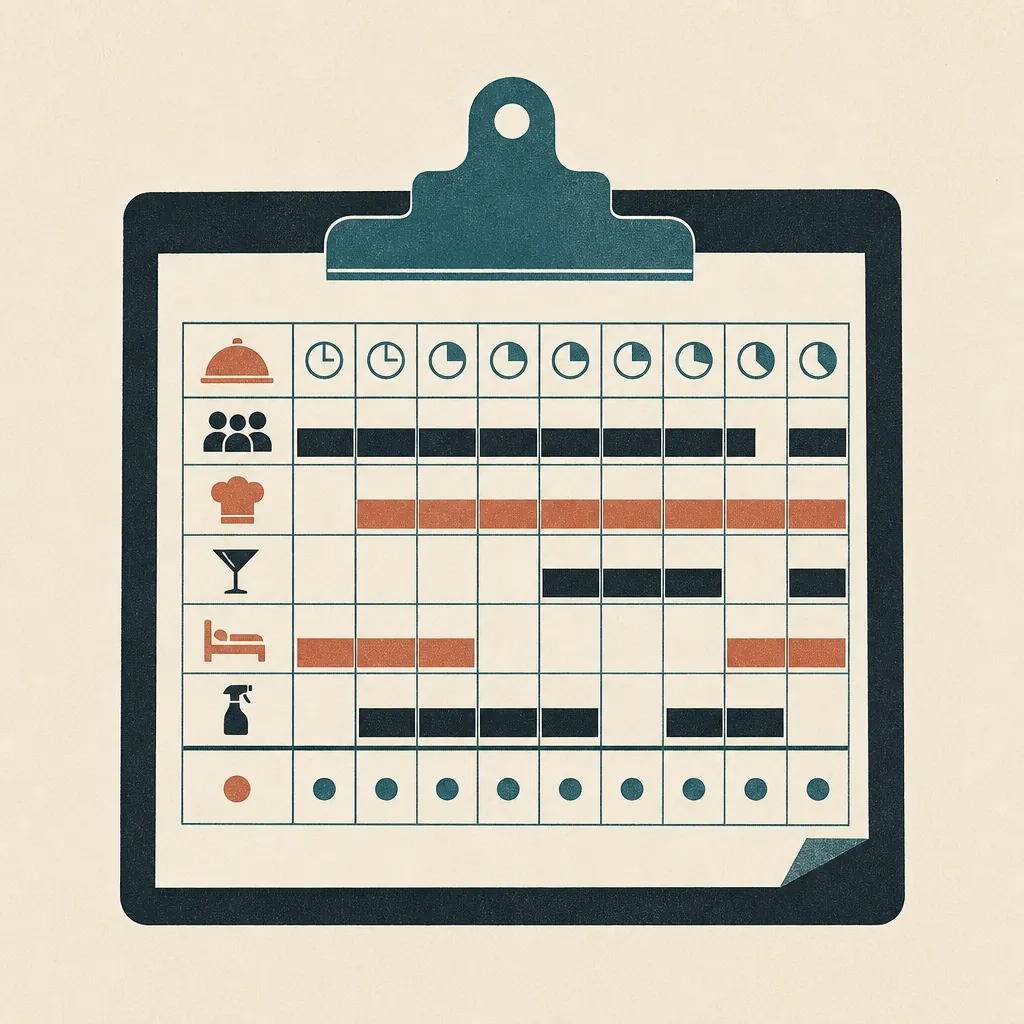
One daily sheet that puts labour against sales by hour, for the site manager, on the morning after - not in a monthly pack.
-
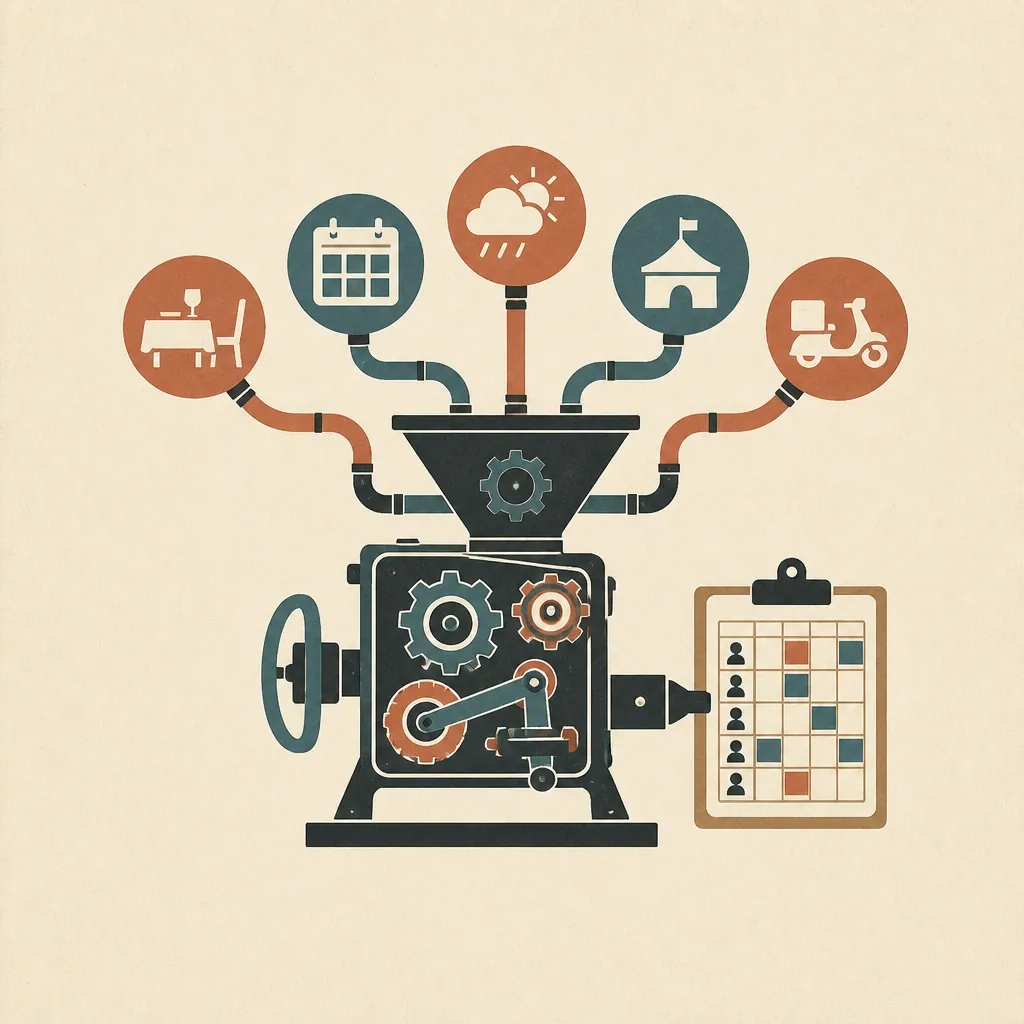
A roster suggestion built from the things that actually move covers: bookings, day of week, weather, local events and delivery platform activity.
-
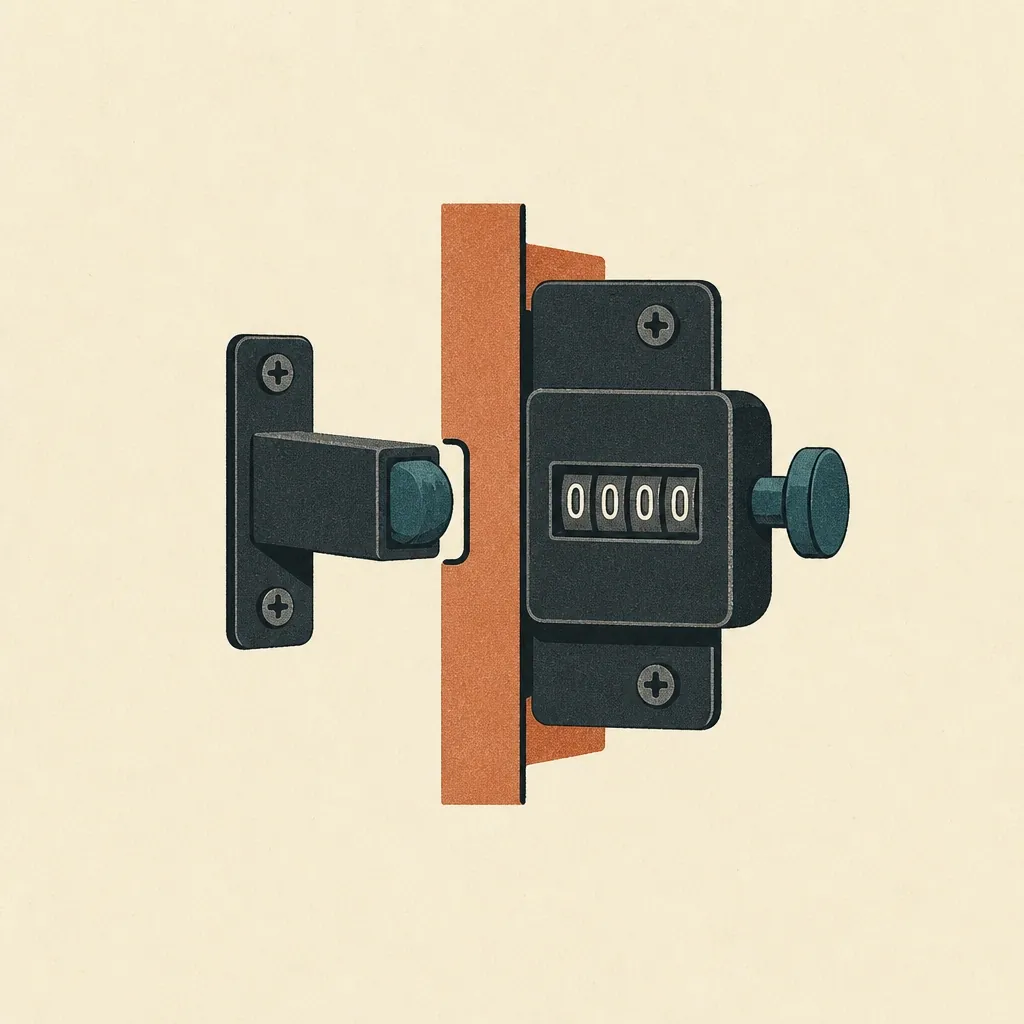
A door counter we build and install where the till cannot see footfall. Then the roster is checked against people, not against transactions.
-
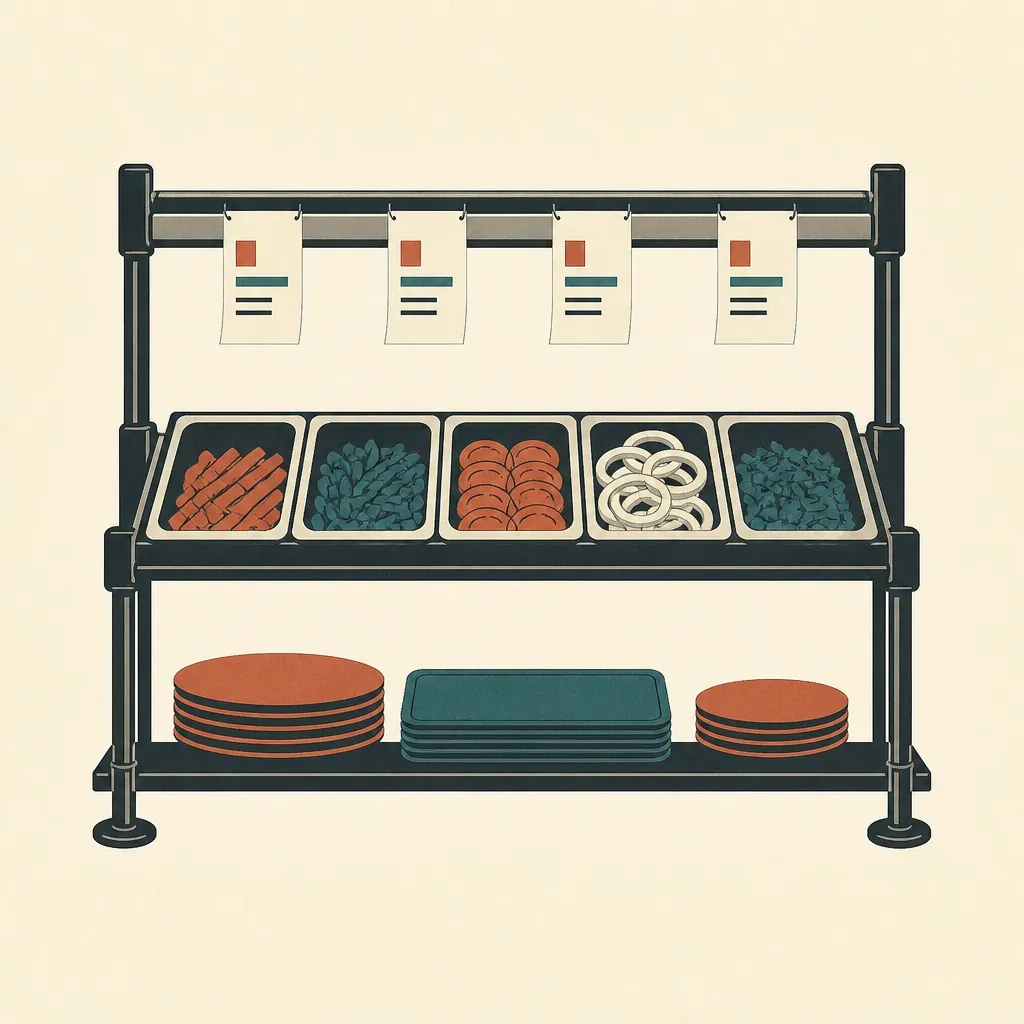
A prep screen for the kitchen that needs no training. A screen that needs training is a screen ignored by week two.
How you would know it worked
Numbers in your own reporting, not ours.
- Labour as a share of sales, by hour and by site, rather than as one monthly figure.
- Number of shifts changed inside twenty-four hours of the shift, which is the cost nobody books.
- Manager hours spent on the phone filling gaps, counted for a fortnight before and after.
Straight answers
Where a model is involved, it is scored against your own records first. Accuracy per source, not one flattering average.
The questions this raises
-

Does this replace our POS or our rota tool?
Neither. Toast stays, the rota tool stays. We read both and build the join between them, which is the part neither vendor sells.
-

Our POS has no usable export. Is that the end of it?
No. A nightly file, a database we can read, or a report it emails are all workable routes. We have built against each. Name yours on the call.
-

Does the software decide who works?
No. It proposes and a manager approves. Nobody is rostered, moved or sent home by a system, and we would not build it that way.
-

We run a small group, not a chain. Is this worth it?
Say the site count and the labour percentage on the call. If the recoverable amount does not cover the build we will tell you, rather than sell you something.
Where the figures come from
We did not make these up, and you should not take our word for them.
Every partner sends a different shape
The format belongs to them. The cost lands on you.
Documents arrive from outside in whatever shape the sender chose, and the sender changes it whenever their own system does. No vendor can ship this. The set of formats is specific to who you trade with, which is why it ends up as a script nobody owns.
- Agriculture & foodThe traceability deadline moved to 2028, and nothing else changed
- Banking & lendingFifty-five cents of every revenue dollar goes to running the bank
- InsuranceA combined ratio above one hundred means underwriting lost money
- RetailShrink went from 1.4 to 1.6 percent, and the till already knew where
- Supply chainThe official inventory number arrives six weeks after the month it describes
Bordereaux, carrier files, supplier invoices, delivery notes. Whatever arrives in your inbox in nine shapes is the same job.Send us the messiest one you have.
The till already knows the covers. Nothing joins it to the roster.
The build is a daily labour-against-sales sheet and a roster suggestion from real demand. Plus a door counter we make where the till cannot see footfall.
See everything we build-
 Software
 -
 Hardware
 -
 Ways of working
 -
 Whole ventures
Is this happening to you? Tell us the size of it.
Twenty minutes. We will tell you honestly whether the numbers justify doing anything about it.