

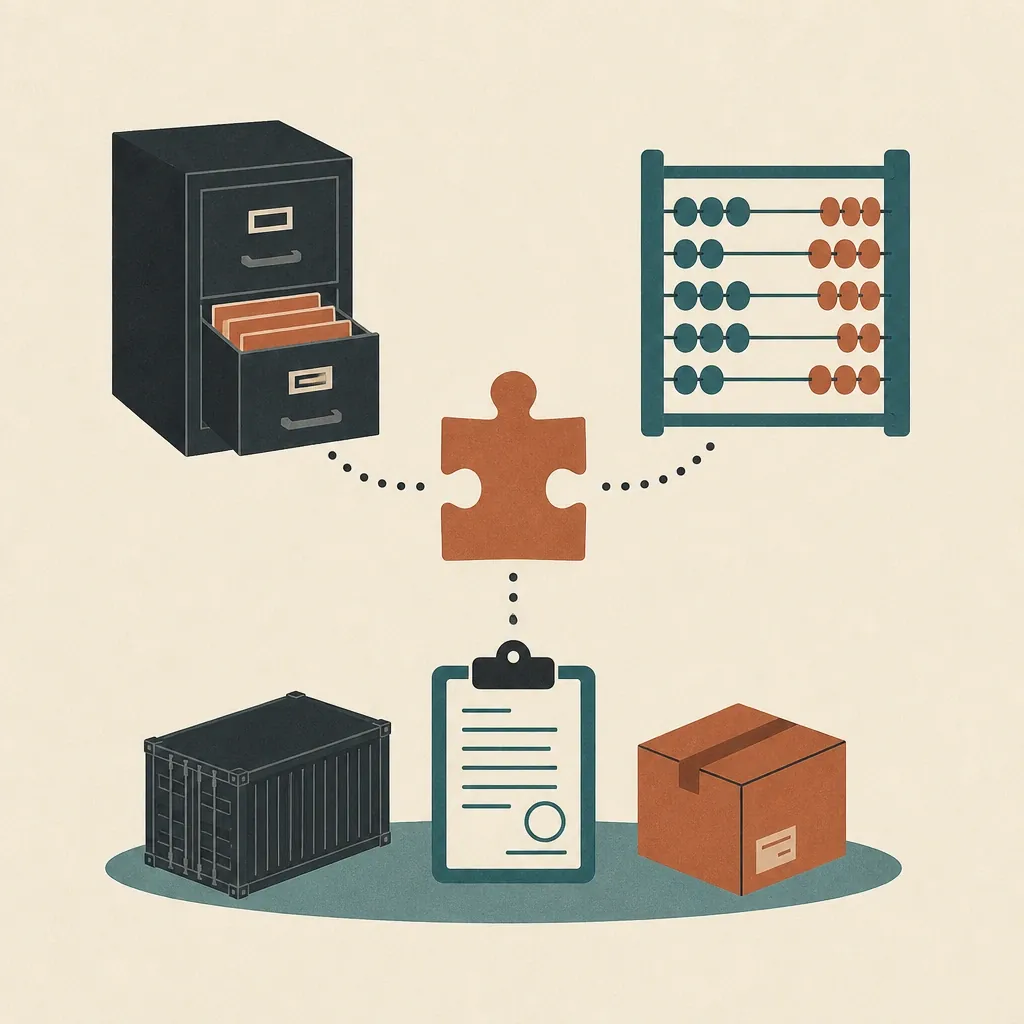
The official inventory number arrives six weeks after the month it describes
Why does our planning always seem to be reacting rather than anticipating?
Figures and rules on this page apply to
United States
Working somewhere else? The shape of the problem usually travels. The deadlines do not.
What this looks like
The planning meeting opens with last month's figures, which everybody already knows are last month's. Somebody says the ratio moved and somebody else says it moved because of a promotion that ended weeks ago. The decision that follows is about a world that has already changed, and everyone in the room knows it.

The numbers
Every figure here is someone else’s. Check them.
- 6 weekstypical delay between a reference month closing and the official inventories figure being published
- 1.30total business inventories-to-sales ratio at the most recent reading
- 1.39the same ratio a year earlier, a move most operations felt before they could measure it
- 1.31 / 1.32the two preceding monthly readings, showing how small the month-to-month signal is
Why it happens
It is not a people problem.
A planning cycle can only be as fast as its slowest input, and the slowest input is almost never the forecast. It is the reconciliation: matching what the ERP says shipped against what the carrier says moved against what the customer says arrived. That reconciliation is done monthly because doing it by hand weekly is impossible, not because monthly is right.
Why your current software has not fixed it
Because it was never built to.
Your ERP is the system of record and is correct about what it was told. The forecasting tool is good at the maths and assumes its inputs are current. Neither owns the gap between them, which is where carrier documents, customs filings and supplier confirmations arrive in a dozen formats. Closing that gap is not a feature either vendor can ship, because the formats are yours.
Intelligence, plumbed in
Every carrier reports differently, and all of those formats are readable.
The build is carrier documents read on arrival, one agreed meaning per field, and a planner screen showing the decision due today. Underneath it: a connector, one agreed meaning per field, and a test set scored on your own records.
How we make AI survive real data-
 Connectors
 -
 A semantic layer
 -
 Evals you can check
However hard, whatever it is
Latency is one example. Bring the one with a date on it.
We wrote this up because the release schedule makes the lag checkable. If yours is customs, carrier performance or a stockout, we work it identically.
-
 01
01 We sit with you
Days where the work happens, not a workshop in a meeting room. We watch the job get done and write down the shortcuts nobody wrote down.
-
 02
02 We read everything
Your data, your rules, your vendors and their documentation, and the published research on your sector. We report what is actually in there.
-
 03
03 We break it to first principles
Not which tool fixes this. What is actually causing it, taken apart until we reach the piece that cannot be divided further.
-
 04
04 Then we build
Weeks, not quarters. By this point we are not guessing what to build, and guessing is the thing that makes projects long.
What we build
Specific enough to argue with.
Four mechanisms, not four features. Each one is a thing that happens on its own, every day, whether or not anyone remembers to run it.
-
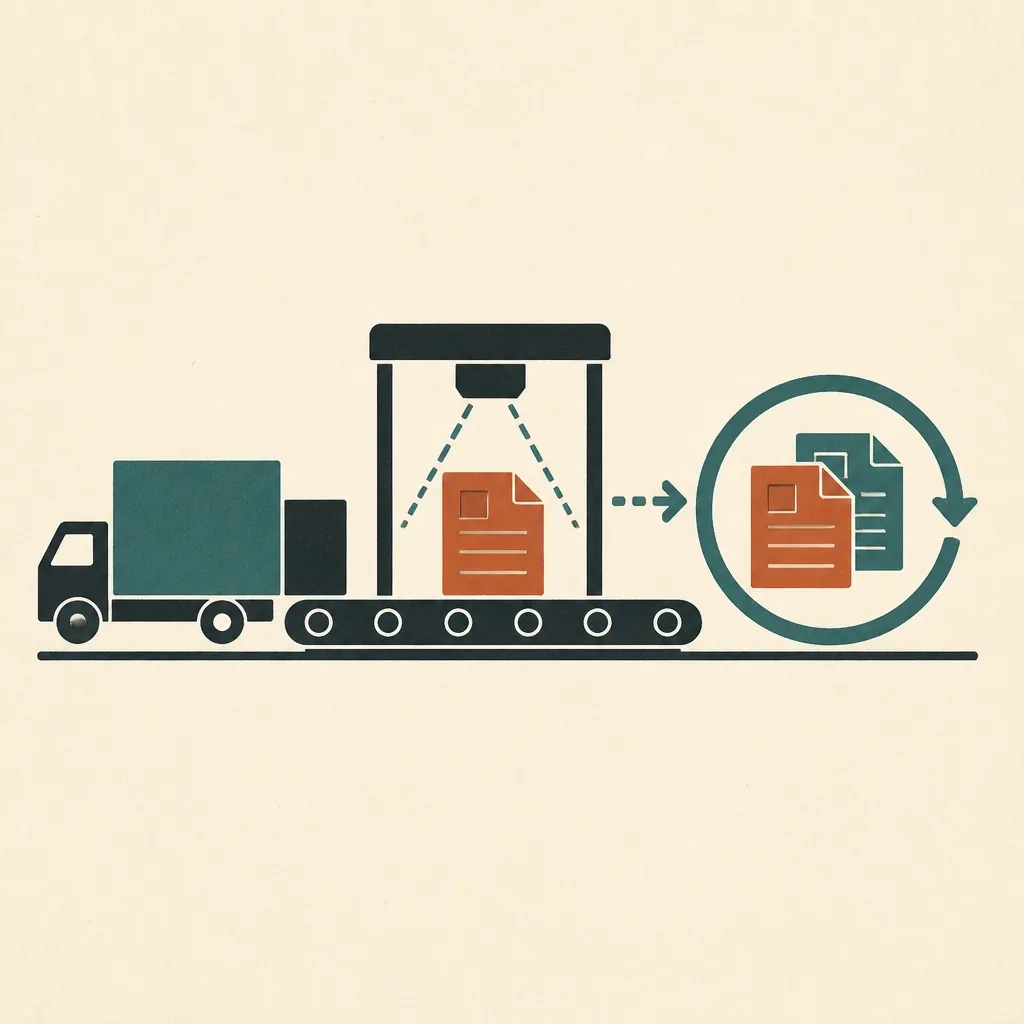
Carrier and supplier documents read on arrival in whatever format they come, so the reconciliation runs daily instead of monthly.
-
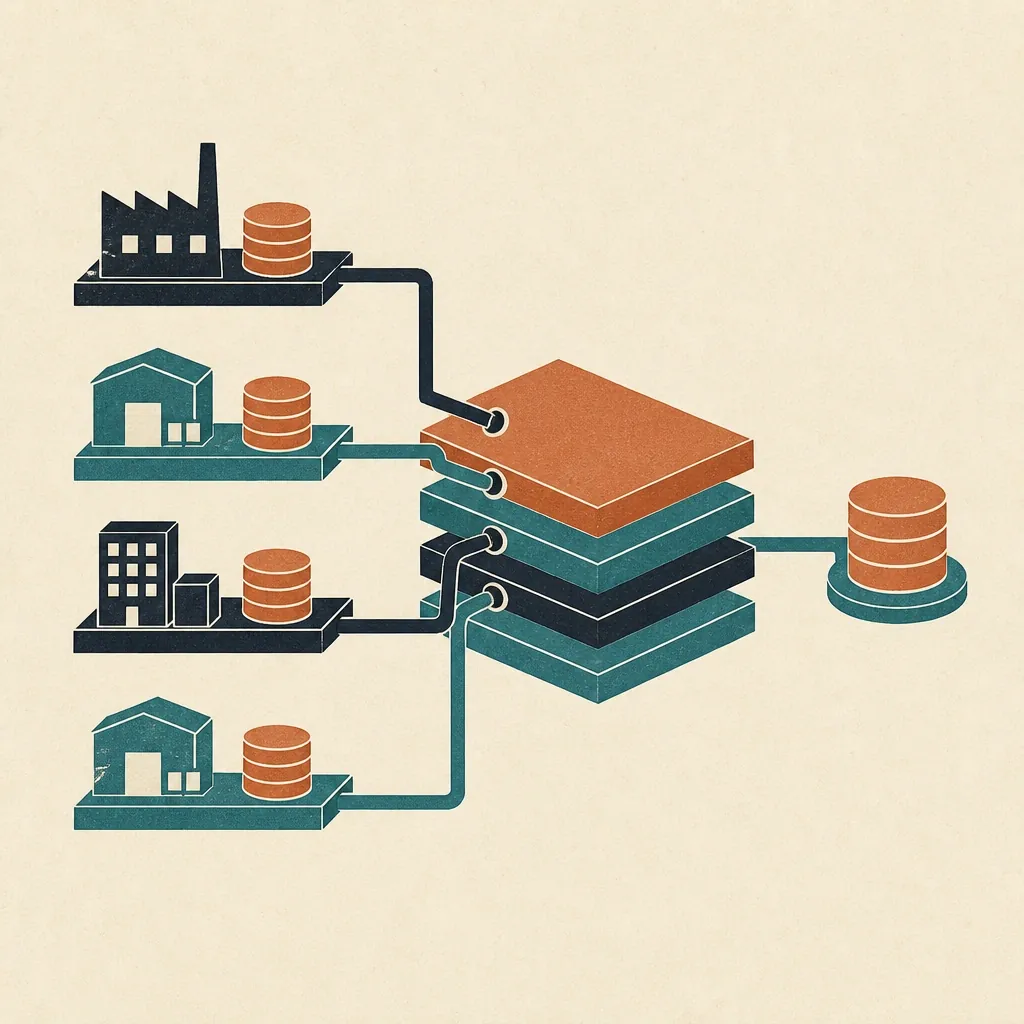
One meaning for every partner's version of the same field, held in a layer rather than in a spreadsheet somebody maintains.
-

A planner screen showing the one decision that is actually due today, rather than a dashboard of everything.
-

A tracker for the legs of the journey nobody reports on, built by us when no carrier feed covers them.
How you would know it worked
Numbers in your own reporting, not ours.
- Days from an event happening to it being visible in planning, which is the number this is really about.
- Share of shipments reconciled automatically, without a person opening a document.
- Forecast error against actuals, which should improve simply because the inputs got fresher.
Straight answers
Where a model is involved, it is scored against your own records first. Accuracy per source, not one flattering average.
The questions this raises
-
Our ERP has a supply chain module. Why is this separate?
It is not separate; it reads the ERP. The module is correct about what it was told, and the delay lives in what it has not been told yet, which arrives as documents.
-

Our carriers all send different formats.
That is the normal case and it is the actual work. EDI, a CSV on SFTP, a tracking page with no API, a photo from a driver. All readable, with one agreed meaning held above them.
-

Would better forecasting software fix this?
Only if the inputs were current, and they are not. A better model on six-week-old data is a better answer to last month's question.
-

How long before we see anything?
The reconciliation usually lands first because it needs no model. Weeks rather than quarters, and you can check it against your own month-end.
Where the figures come from
We did not make these up, and you should not take our word for them.
Every partner sends a different shape
The format belongs to them. The cost lands on you.
Documents arrive from outside in whatever shape the sender chose, and the sender changes it whenever their own system does. No vendor can ship this. The set of formats is specific to who you trade with, which is why it ends up as a script nobody owns.
- Agriculture & foodThe traceability deadline moved to 2028, and nothing else changed
- Banking & lendingFifty-five cents of every revenue dollar goes to running the bank
- HospitalityThe roster was set last Tuesday. The covers were not
- InsuranceA combined ratio above one hundred means underwriting lost money
- RetailShrink went from 1.4 to 1.6 percent, and the till already knew where
Bordereaux, carrier files, supplier invoices, delivery notes. Whatever arrives in your inbox in nine shapes is the same job.Send us the messiest one you have.
The bottleneck is the reconciliation, not the forecast.
The build is carrier documents read on arrival, one agreed meaning per field, and a planner screen showing the decision due today.
See everything we build-
 Software
 -
 Hardware
 -
 Ways of working
 -
 Whole ventures
Is this happening to you? Tell us the size of it.
Twenty minutes. We will tell you honestly whether the numbers justify doing anything about it.