

Every hotel project arrives as a different drawing set
How does a bespoke fit-out maker quote faster when every project brief comes in a different format?
Figures and rules on this page apply to
Europe
Working somewhere else? The shape of the problem usually travels. The deadlines do not.
What this looks like
A new hotel brief lands: an architect's PDF set, a furniture schedule in a spreadsheet, a finishes list in an email. Estimating re-types it into a costing sheet. Three weeks later the quote goes out. Meanwhile the next two briefs are waiting in the same queue.
The numbers
Every figure here is someone else’s. Check them.
- 252,600hotel rooms in Europe's construction pipeline at the end of 2025, across 1,717 projects
- 115,289of those rooms already under construction, each one needing furniture made to a drawing
- +16%year-on-year growth in rooms at the early planning stage, the briefs that arrive next
- 29.7mbed places across EU tourist accommodation in 2024, each room refitted on a cycle
Why it happens
It is not a people problem.
The brief belongs to the client and their architect, not the maker. Every practice draws, schedules and specifies in its own way. Quoting capacity is therefore limited by how fast people can read other firms' documents, not by how fast the factory can build.
Why your current software has not fixed it
Because it was never built to.
The ERP and the costing tools start once the bill of materials exists. Nothing in them reads an architect's drawing set. Adding plants in lower-cost countries raises production capacity, but the quote queue stays the same size because it sits in front of every plant.
Intelligence, plumbed in
An architect's schedule in a PDF, with notes in the margin, is readable and can be turned into lines on a quote.
We build the reader for your clients' documents, then hand your estimators a draft instead of a blank sheet. Underneath it: a connector, one agreed meaning per field, and a test set scored on your own records.
How we make AI survive real data-
 Connectors
-
 A semantic layer
-
 Evals you can check
However hard, whatever it is
Hotel fit-out is one example. Bring the brief that takes longest to read.
We wrote this about contract furniture because the hotel pipeline makes quoting speed decisive. The same approach works for any maker that builds to someone else's drawings.
-
 01
We sit with you
Days where the work happens, not a workshop in a meeting room. We watch the job get done and write down the shortcuts nobody wrote down.
-
 02
We read everything
Your data, your rules, your vendors and their documentation, and the published research on your sector. We report what is actually in there.
-
 03
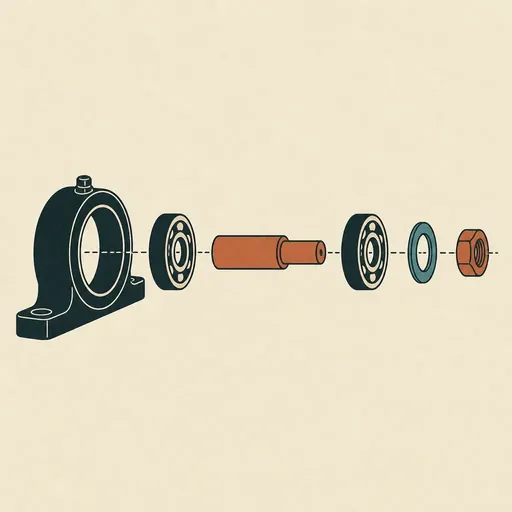
We break it to first principles
Not which tool fixes this. What is actually causing it, taken apart until we reach the piece that cannot be divided further.
-
 04
Then we build
Weeks, not quarters. By this point we are not guessing what to build, and guessing is the thing that makes projects long.
What we build
Specific enough to argue with.
Four mechanisms, not four features. Each one is a thing that happens on its own, every day, whether or not anyone remembers to run it.
-
Drawing sets, furniture schedules and finish specs read on arrival, in whatever format the architect used.
-
A draft bill of materials and costing, built from your own past projects, for an estimator to check.
-
One project record shared by every plant, so a job can be quoted in one country and built in another.
-
Client change orders tracked against the original brief automatically.
How you would know it worked
Numbers in your own reporting, not ours.
- Days from brief received to quote sent.
- Share of each quote built without re-typing the client's documents.
- Win rate on projects quoted inside the client's deadline.
Straight answers
Where a model is involved, it is scored against your own records first. Accuracy per source, not one flattering average.
The questions this raises
-
Our estimators know things no model does.
That is why they check every draft. The layer removes the re-typing, not the judgement.
-
We run plants in several countries on different systems.
The project record sits above them, so each plant keeps its own system and reads the same job.
-
How fast would we see a difference?
Brief intake usually lands first, within weeks, measured on your next live tenders.
Where the figures come from
We did not make these up, and you should not take our word for them.
Also in manufacturing
Productivity fell in fourteen of the twenty manufacturing groups measured
Federal figures show labour productivity declining across most manufacturing industry groups. Machine data is abundant. The work between machines is not recorded at all.
ProblemEvery plant you add keeps its own production record
Contract device makers grow by buying plants. Each one arrives with its own travellers, lot numbering and record format, and the auditor still expects one traceable story.
ProblemEvery line you built is one of a kind, and its history is in service notes
Makers of packing and sorting lines build each one to order, then service it for years. The real record of each line sits in service reports and engineers' notes.
ProblemEach shop in the group quotes alone, from its own past jobs
Groups of contract manufacturers grow by buying local shops. Each shop still quotes from its own records, so the group never sees what it already knows.
ProblemThe shop you just bought can make parts your estimators never quote
Precision machining groups grow by buying shops. Each shop arrives with its own machines, job history and quoting habits, and requests still land wherever the customer first sent them.
ProblemOne heat network, two pipe ranges, and every bid costed by hand
Pipe makers now sell complete heat-network systems. Each bid still means reading someone else's network plans and costing every run by hand, often in two separate catalogues.
Every partner sends a different shape
The format belongs to them. The cost lands on you.
Documents arrive from outside in whatever shape the sender chose, and the sender changes it whenever their own system does. No vendor can ship this. The set of formats is specific to who you trade with, which is why it ends up as a script nobody owns.
- Agriculture & foodThe traceability deadline moved to 2028, and nothing else changed
- Banking & lendingFifty-five cents of every revenue dollar goes to running the bank
- HospitalityThe roster was set last Tuesday. The covers were not
- InsuranceA combined ratio above one hundred means underwriting lost money
- RetailShrink went from 1.4 to 1.6 percent, and the till already knew where
Bordereaux, carrier files, supplier invoices, delivery notes. Whatever arrives in your inbox in nine shapes is the same job.Send us the messiest one you have.
The quote queue is a reading problem, not a capacity problem.
We build the reader for your clients' documents, then hand your estimators a draft instead of a blank sheet.
See everything we build-
 Software
-
 Hardware
-
 Ways of working
-
 Whole ventures
Is this happening to you? Tell us the size of it.
Twenty minutes. We will tell you honestly whether the numbers justify doing anything about it.